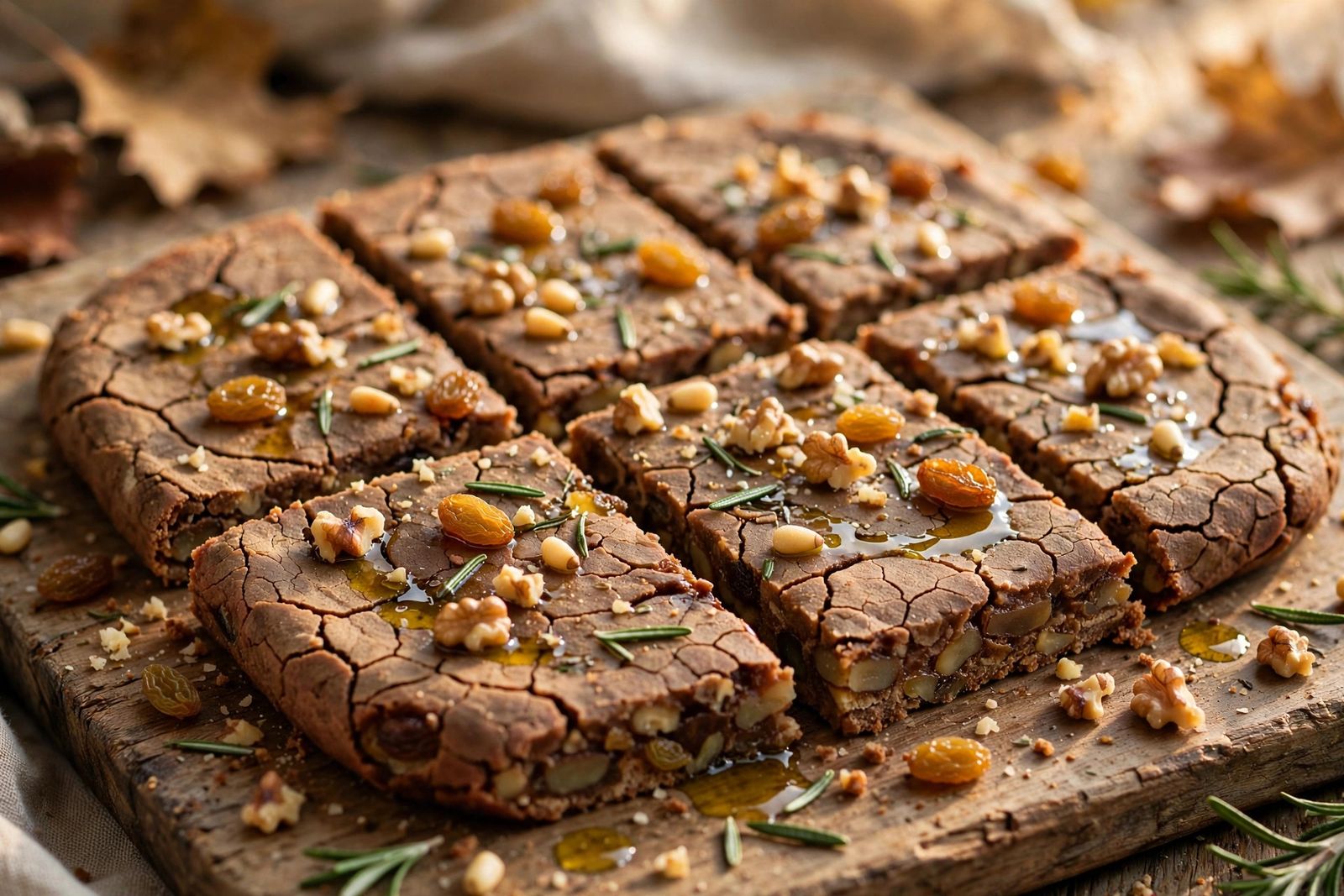
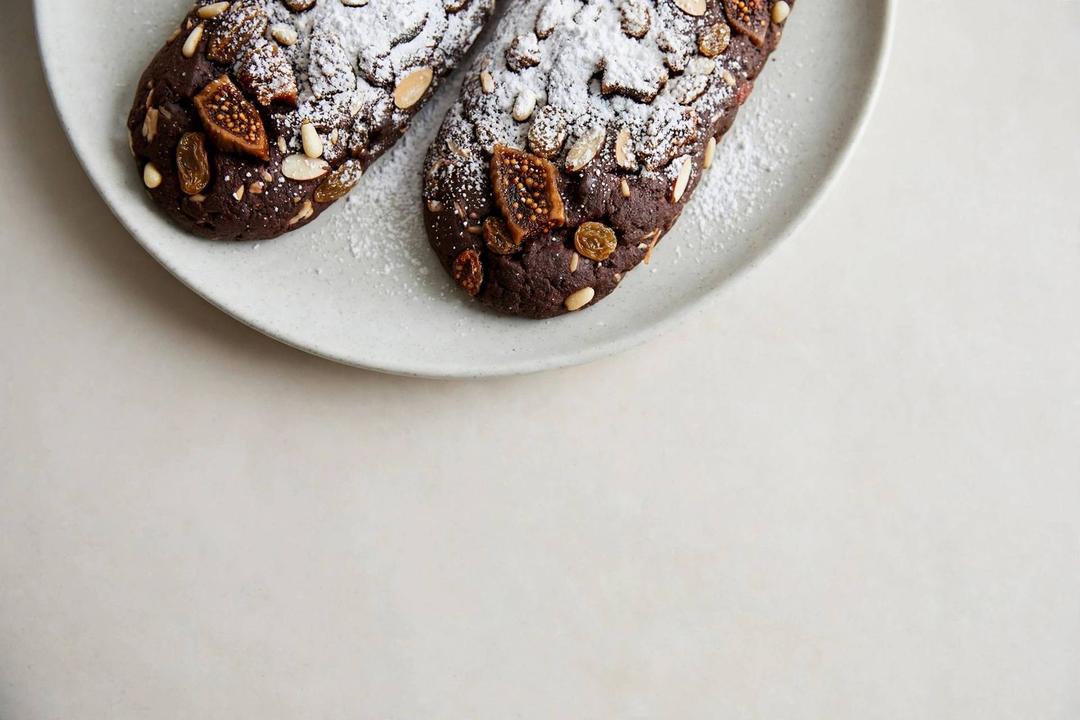
An easy adaptation exists for children: reduce the rosemary slightly, chop the walnuts finely, use extra raisins for natural sweetness, and serve in small squares like snack bars. Note the texture is unusual for children expecting cake — it is more like a dense chestnut brownie or polenta slice.
“Kids love it” means flavors young taste buds enjoy — not safety for every child. Adults must supervise knives, heat and appliances — written for adults to prepare with children.
Storage & shelf life
Not available yet. We only show storage times backed by food-safety sources, and we haven’t verified this dish yet. If in doubt, throw it out.
Share a storage tip: coming soon
Story behind this dish
Castagnaccio is a beautiful example of “poor cuisine” becoming heritage cuisine. For centuries, chestnuts were called the “bread tree” in some mountain regions, because chestnut flour could provide calories when wheat was scarce — the original dish was a practical way to turn stored chestnut flour into nourishing food, not a luxury dessert. A traditional Tuscan belief also associated rosemary with romance and courtship, giving the herb a folkloric role beyond flavour.
Please read: this recipe is ai-assisted · human-reviewed · not kitchen-tested. It was researched with AI assistance, reviewed by a human, and never tested in a kitchen — times, temperatures and quantities may need adjusting. Always use a food thermometer and follow current guidance from authorities such as the USDA. If something looks or smells wrong, don’t eat it. Allergies: ingredient lists are informational and may be incomplete — read every product label yourself, and if you are unsure, don’t eat it. This is not medical or nutritional advice.
Tried it? Tell us.
Submissions are read by our team before anything appears publicly.
Comments
Public, checked by a moderator before they appear.