3 tbsp whole urad dal, dry-fried, ground and sieved (~2 tbsp flour — ~2 : 0.19 rice:urad, just below the packet band’s lower edge; honest household variance)
1 tsp cumin seeds, coarsely broken (not powdered)
2 tsp hot oil (or room-temp butter)
1 pinch hing
Salt to taste
Oil for frying
Method
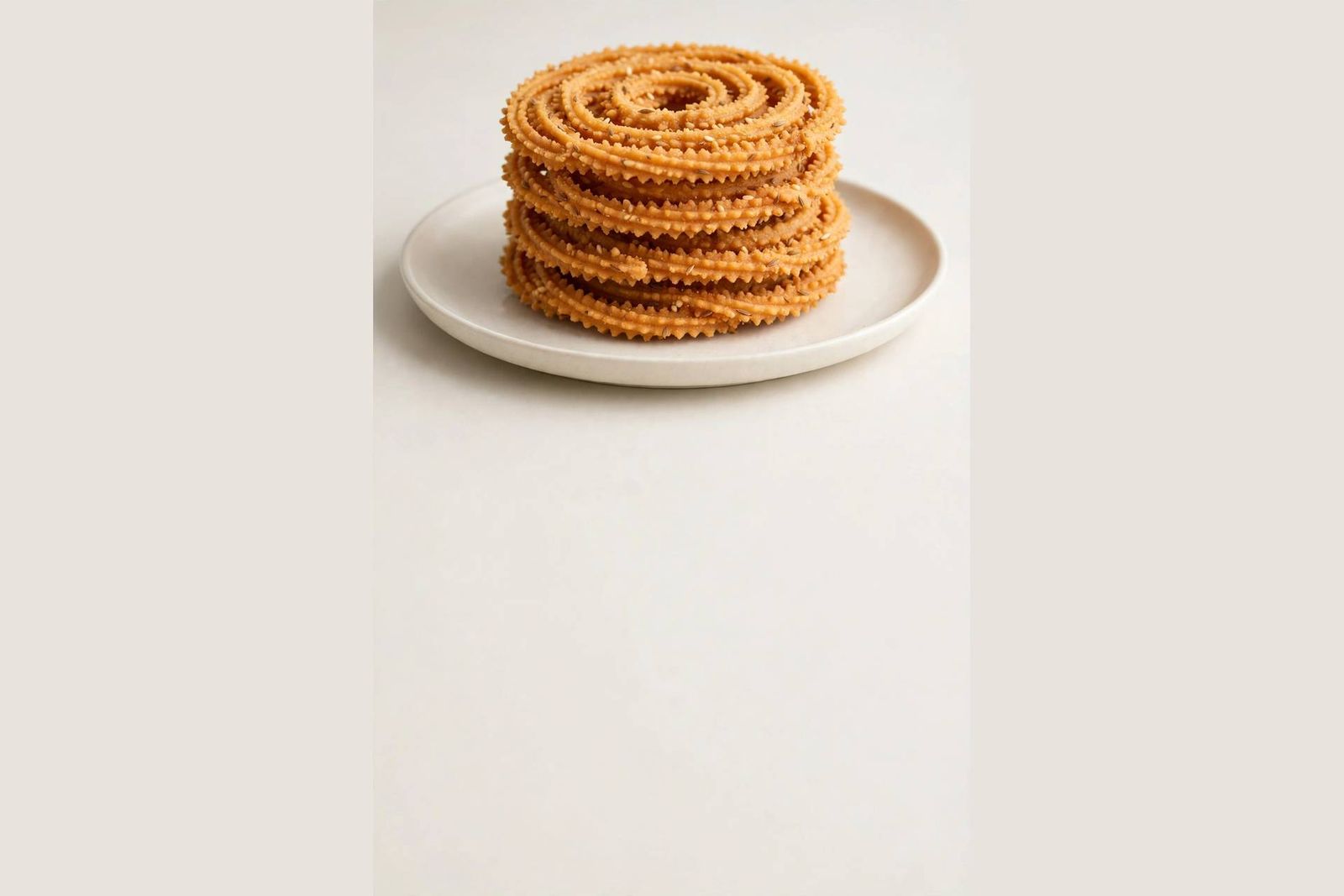
Dry-roast/fry the urad dal 2 minutes on medium till aromatic — no burning (A) / not red, or the murukku turns red (B); cool completely; grind fine; sieve and measure.
Mix the rice flour, urad flour, hing, cumin/sesame and salt; add the hot oil or melted butter with a ladle (caution — A).
Add water little by little to a soft dough — neither too hard nor too soft (A) / soft chapati-like (B); keep covered with a damp muslin cloth at all times (A). Warm store-bought flours in a kadai before use (A).
Heat the oil in a wide kadai; dough-bit test (rises immediately = ready).
Fit the three-hole murukku aachu (disc) in the press and oil it (A); press spirals onto oiled ladles (beginners) or straight into the oil; do not disturb for 2 minutes (A).
Flip gently; cook on medium (A) / LOW flame (B) till light golden brown and the oil stops bubbling — consensus medium-low to medium, low being the safer end for golden-not-dark colour. Target light golden brown (do not let the urad go red).
Drain on tissue/paper towel; cool FULLY before airtight storage. Too much butter/oil = won’t hold shape (A).
Sharing instead of copying keeps this library free.
“Kids love it” means flavors young taste buds enjoy — not safety for every child. Adults must supervise knives, heat and appliances — written for adults to prepare with children.
Storage & shelf life
Not available yet. We only show storage times backed by food-safety sources, and we haven’t verified this dish yet. If in doubt, throw it out.
Share a storage tip: coming soon
Story behind this dish
Murukku means 'twisted' in Tamil — the hand-twisted kai murukku came before the press, and the Manapparai murukku sought GI recognition for the craft.
Please read: this recipe is ai-assisted · human-reviewed · not kitchen-tested. It was researched with AI assistance, reviewed by a human, and never tested in a kitchen — times, temperatures and quantities may need adjusting. Always use a food thermometer and follow current guidance from authorities such as the USDA. If something looks or smells wrong, don’t eat it. Allergies: ingredient lists are informational and may be incomplete — read every product label yourself, and if you are unsure, don’t eat it. This is not medical or nutritional advice.
Tried it? Tell us.
Submissions are read by our team before anything appears publicly.
Comments
Public, checked by a moderator before they appear.