1 tsp dry mango powder / amchoor (Vanita’s) / 1 tsp chat masala (Achala) — same tang role
Salt to taste
Oil for frying the nuts and tempering
Method
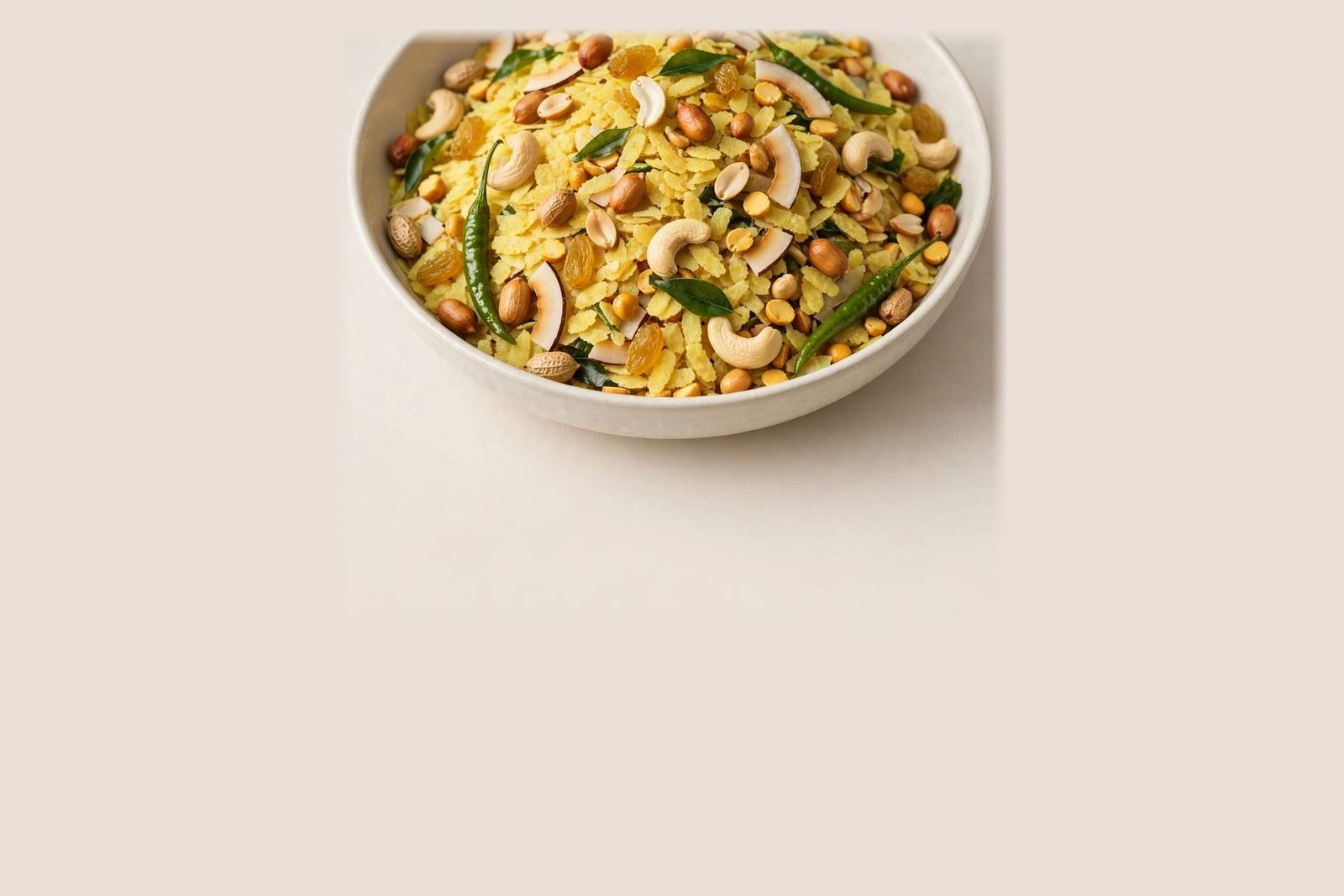
Dry-roast the poha on low to medium-low flame with gentle constant stirring till crisp (2–3 min — Achala; do NOT use high flame, it burns). Set aside.
Deep-fry the peanuts, roasted chana dal, cashews, raisins and coconut slices one by one (Vanita’s); drain. (Achala roasts them in the tempering oil instead.)
Heat 2 tbsp oil; crackle the mustard seeds (and cumin — Achala); add green chillies, curry leaves and hing; sauté.
Add turmeric, salt, amchoor (or chat masala) and sugar; sauté on low ~30 seconds till the sugar starts caramelizing (Achala).
Add the fried/roasted nut mixture, then the roasted poha; toss gently without breaking the flakes.
Switch off, cool COMPLETELY before storing airtight. Keeps about a month (Achala).
Sharing instead of copying keeps this library free.
“Kids love it” means flavors young taste buds enjoy — not safety for every child. Adults must supervise knives, heat and appliances — written for adults to prepare with children.
Storage & shelf life
Not available yet. We only show storage times backed by food-safety sources, and we haven’t verified this dish yet. If in doubt, throw it out.
Share a storage tip: coming soon
Story behind this dish
Poha chivda is the savoury backbone of Maharashtra's Diwali faral — thin flattened rice dry-roasted crisp, tossed with fried nuts, dal and coconut, and finished with a mustard-seed, curry-leaf and turmeric tempering. Home cooks make it by the jar before the festival, and it keeps for weeks in an airtight tin. Its style is specific to western India, especially Maharashtra and northern Karnataka, but no documented invention history is on record.
Please read: this recipe is ai-assisted · human-reviewed · not kitchen-tested. It was researched with AI assistance, reviewed by a human, and never tested in a kitchen — times, temperatures and quantities may need adjusting. Always use a food thermometer and follow current guidance from authorities such as the USDA. If something looks or smells wrong, don’t eat it. Allergies: ingredient lists are informational and may be incomplete — read every product label yourself, and if you are unsure, don’t eat it. This is not medical or nutritional advice.
Tried it? Tell us.
Submissions are read by our team before anything appears publicly.
Comments
Public, checked by a moderator before they appear.