Allergens: not checked yet. Read the ingredient list and every product label before cooking.
Sign in to save favorites. Sharing instead of copying keeps this library free.
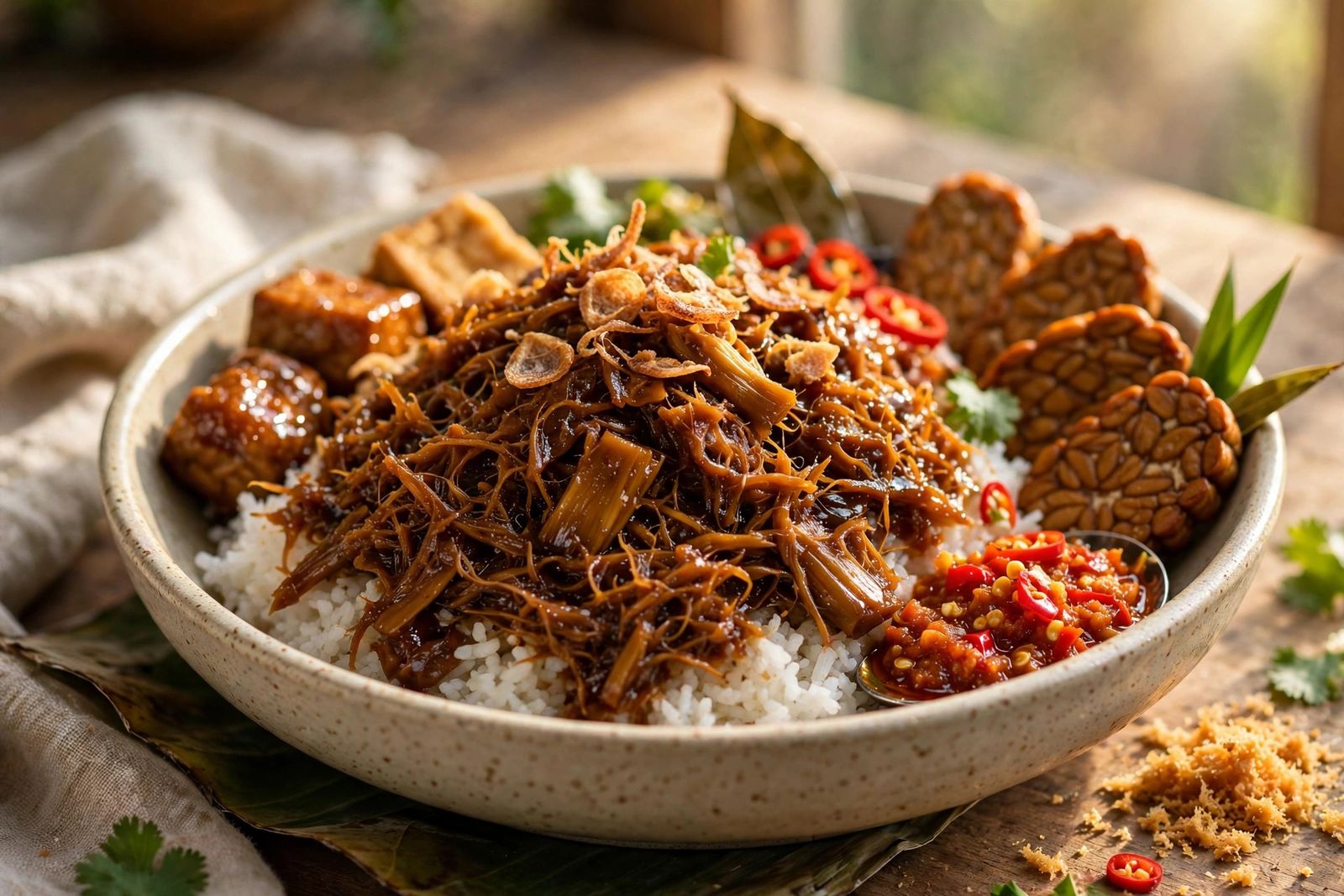
Gudeg
Pre-boil
1 kg young jackfruit (nangka muda — young green jackfruit; unripe, firm, starchy flesh), peeled, seeded, cut into 2-inch pieces — or 2 cans (800 g) green jackfruit in brine, drained and rinsed
Water to cover
Bumbu halus (ground spice paste)
8 shallots, peeled
5 cloves garlic, peeled
4 candlenuts (kemiri — rich, oily nut used as a thickener; substitute raw macadamia if unavailable), toasted 2 min
1 tbsp coriander seeds, dry-toasted
1 tsp salt
¼ tsp white pepper
2 tbsp neutral oil, for sautéing
(Blend everything to a smooth paste with 2–3 tbsp water.)
Braise
5 daun salam (Indonesian bay leaves)
3 cm fresh galangal (lengkuas), bruised
2 lemongrass stalks, bruised and knotted
1 L thin coconut milk (santan encer)
400 ml thick coconut milk (santan kental)
150–200 g palm sugar (gula aren/gula jawa), shaved
1½ tsp salt, plus more to taste
2 black tea bags (color substitute for daun jati teak leaves — tea gives the color; teak leaves give the tradition)
To serve
Steamed jasmine rice
Fried shallots
Optional sambal on the side (adults only for kids' portions)
Method
Boil the jackfruit pieces in plenty of water 20–30 min to soften and remove the raw edge. Drain. (Canned: rinse well, boil 10 min.) Lightly bruise pieces with a pestle or knife handle — helps the spices penetrate.
Blend the bumbu halus components to a smooth paste with 2–3 tbsp water.
Heat the oil in a heavy pot or Dutch oven over medium heat. Sauté the paste 5–7 min until deep golden and fragrant, oil glistening at the edges.
Add jackfruit, daun salam, galangal, and lemongrass; toss 3 min to coat.
Pour in the thin coconut milk plus enough water to just submerge everything. Add palm sugar, salt, and tea bags. Bring to a gentle boil, then reduce to the lowest simmer.
Simmer 3–4 hr, partially covered, stirring every 30 min. The liquid reduces; the jackfruit turns reddish-brown and silky.
Remove tea bags and leaves. Pour in the thick coconut milk; simmer 30–45 min more until the sauce is nearly dry and everything is coated in a glossy, dark braise. Taste: sweet first, gently savory after, salt to finish.
Rest 15 min. Serve warm over steamed rice with fried shallots and sambal on the side.
Sharing instead of copying keeps this library free.
Natural — sweet, mild, and soft-simmered for hours until the jackfruit goes spoon-tender. No adaptation needed; just keep the sambal away from their portion.
“Kids love it” means flavors young taste buds enjoy — not safety for every child. Adults must supervise knives, heat and appliances — written for adults to prepare with children.
Storage & shelf life
Not available yet. We only show storage times backed by food-safety sources, and we haven’t verified this dish yet. If in doubt, throw it out.
Share a storage tip: coming soon
Story behind this dish
Gudeg was born in the 16th century during the founding of the Islamic Mataram kingdom at Alas Mentaok, the forest clearing that became Kotagede — the seed of modern Yogyakarta. As the forest was cut down to build the new court, workers were surrounded by felled young jackfruit trees — fruit considered too ordinary to sell — plus coconut palms at the forest's edge. They cooked the young jackfruit, called gori, in huge cauldrons with coconut milk and spices, stirring for hours with long wooden spoons so a meal could feed hundreds. In Javanese that constant stirring is called hangudeg — and the name stuck. Over centuries it rose from workers' food to the court's table, and the Javanese read meaning into it: the long, patient cooking stands for perseverance (alon-alon asal kelakon — slowly but surely it gets done), and the dominant sweetness for the gentleness and hospitality of Yogyakarta's people. The signature deep brown color comes from teak leaves simmered in the pot — no soy sauce, no caramel.
Please read: this recipe is ai-assisted · human-reviewed · not kitchen-tested. It was researched with AI assistance, reviewed by a human, and never tested in a kitchen — times, temperatures and quantities may need adjusting. Always use a food thermometer and follow current guidance from authorities such as the USDA. If something looks or smells wrong, don’t eat it. Allergies: ingredient lists are informational and may be incomplete — read every product label yourself, and if you are unsure, don’t eat it. This is not medical or nutritional advice.
Tried it? Tell us.
Submissions are read by our team before anything appears publicly.
Comments
Public, checked by a moderator before they appear.