Home / Recipes / Oaxaca, Mexico / Quesadillas de Huitlacoche
Quesadillas de Huitlacoche
Oaxaca, MexicoMonsoonMealVegetarianKids love it
AI-assisted · Human-reviewed · Not kitchen-tested
Allergens: not checked yet. Read the ingredient list and every product label before cooking.
Sign in to save favorites. Sharing instead of copying keeps this library free.
Quesadillas de Huitlacoche
The filling base (sauté first)
2 tbsp neutral oil (or butter)
1 medium white onion, finely chopped
2 cloves garlic, minced
1 poblano chile, roasted, peeled, and cut into thin strips
½ jalapeño or serrano chile, seeded and finely chopped (optional; keep it mild for kids)
Huitlacoche (the star)
500 g fresh huitlacoche (Mexican corn truffle), cleaned and roughly chopped — or 2 cans (~400 g drained), liquid drained
1 tsp fine salt, plus more to taste
Splash of water (only if using canned and the pan is dry)
Herb + cheese (added last)
6–8 fresh epazote leaves, chopped — or 1 tbsp dried
300 g queso Oaxaca (Oaxacan string cheese), pulled into strings (fresh mozzarella works)
Tortillas (made fresh, de comal style)
250 g masa harina (nixtamalized corn flour)
½ tsp fine salt
~300 ml warm water
To serve
Salsa verde or roja on the side
Lime wedges
Pickled red onion (cebollas encurtidas)
Method
Make the tortilla dough. Mix masa harina and salt; pour in warm water gradually, kneading to a soft, pliable dough (like play-dough, not crumbly). Rest 10 min covered with a damp towel.
Start the filling. Heat oil in a wide pan over medium heat. Sauté onion 4–5 min until golden-soft but not browned; add garlic and poblano strips, cook 1 min until fragrant.
Add the huitlacoche. Add huitlacoche and salt. Cook 10–15 min, stirring, until most of the moisture has evaporated and the mixture goes glossy and almost black. Keep some tenderness — moist, never mushy.
Finish with epazote. Stir in the chopped epazote, cook 2 min more, taste for salt. Set aside warm.
Press the tortillas. Divide dough into 8 balls. Press each to ~14 cm rounds, ~3 mm thick.
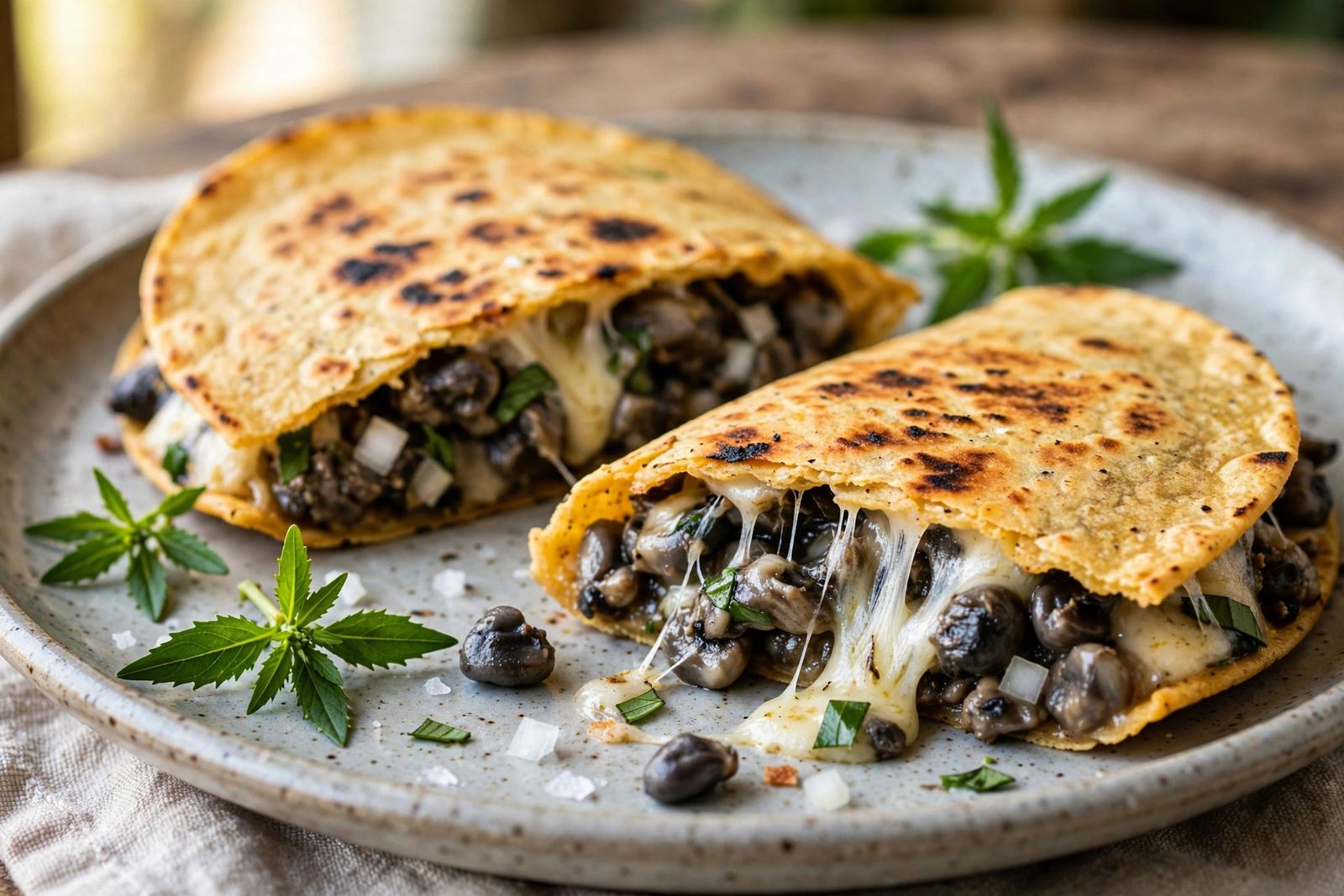
Cook de comal (on the griddle). Heat a dry comal or cast-iron skillet over medium-high. Lay a tortilla on; after ~40 sec flip. On the second side, immediately spread a handful of queso Oaxaca on one half, spoon over the huitlacoche filling, and fold the tortilla closed. Cook 1–2 min per side, pressing gently, until the cheese melts and the tortilla is blistered and golden in spots.
Serve. Hot, with salsa, lime, and pickled onion alongside.
Sharing instead of copying keeps this library free.
Naturally kid-friendly: hand-held, mild, cheesy. Keep the serrano/jalapeño out entirely for kids; chop the huitlacoche fine (the dark color is the "spooky-cool" selling point — call it the Mexican truffle). Halve the epazote in their portion; queso Oaxaca + corn tortilla is universally kid-approved.
“Kids love it” means flavors young taste buds enjoy — not safety for every child. Adults must supervise knives, heat and appliances — written for adults to prepare with children.
Storage & shelf life
Not available yet. We only show storage times backed by food-safety sources, and we haven’t verified this dish yet. If in doubt, throw it out.
Share a storage tip: coming soon
Story behind this dish
Huitlacoche is a fungus that swells grey-blue ears of corn during the rainy season. Where most of the world saw a blight and burned it, Mexico saw a delicacy: the Aztecs were eating it centuries ago, and today it sells for more than the corn it grows on — the "Mexican truffle." In Oaxaca, it rides the rainy-season wave onto the comals: market vendors and street quesadilla-makers stir it with epazote and poblano, fold it into fresh corn tortillas with a tangle of queso Oaxaca, and hand it over blistering hot. There's a quiet poetry to it — the rains that feed the milpa also feed the fungus, and the same epazote that seasons beans seasons huitlacoche. Nothing wasted, everything in season.
Please read: this recipe is ai-assisted · human-reviewed · not kitchen-tested. It was researched with AI assistance, reviewed by a human, and never tested in a kitchen — times, temperatures and quantities may need adjusting. Always use a food thermometer and follow current guidance from authorities such as the USDA. If something looks or smells wrong, don’t eat it. Allergies: ingredient lists are informational and may be incomplete — read every product label yourself, and if you are unsure, don’t eat it. This is not medical or nutritional advice.
Tried it? Tell us.
Submissions are read by our team before anything appears publicly.
Comments
Public, checked by a moderator before they appear.