West Bengal, IndiaAutumnSweetVegetarianFestiveKids love it
AI-assisted · Human-reviewed · Not kitchen-tested
Allergens: not checked yet. Read the ingredient list and every product label before cooking.
Sign in to save favorites. Sharing instead of copying keeps this library free.
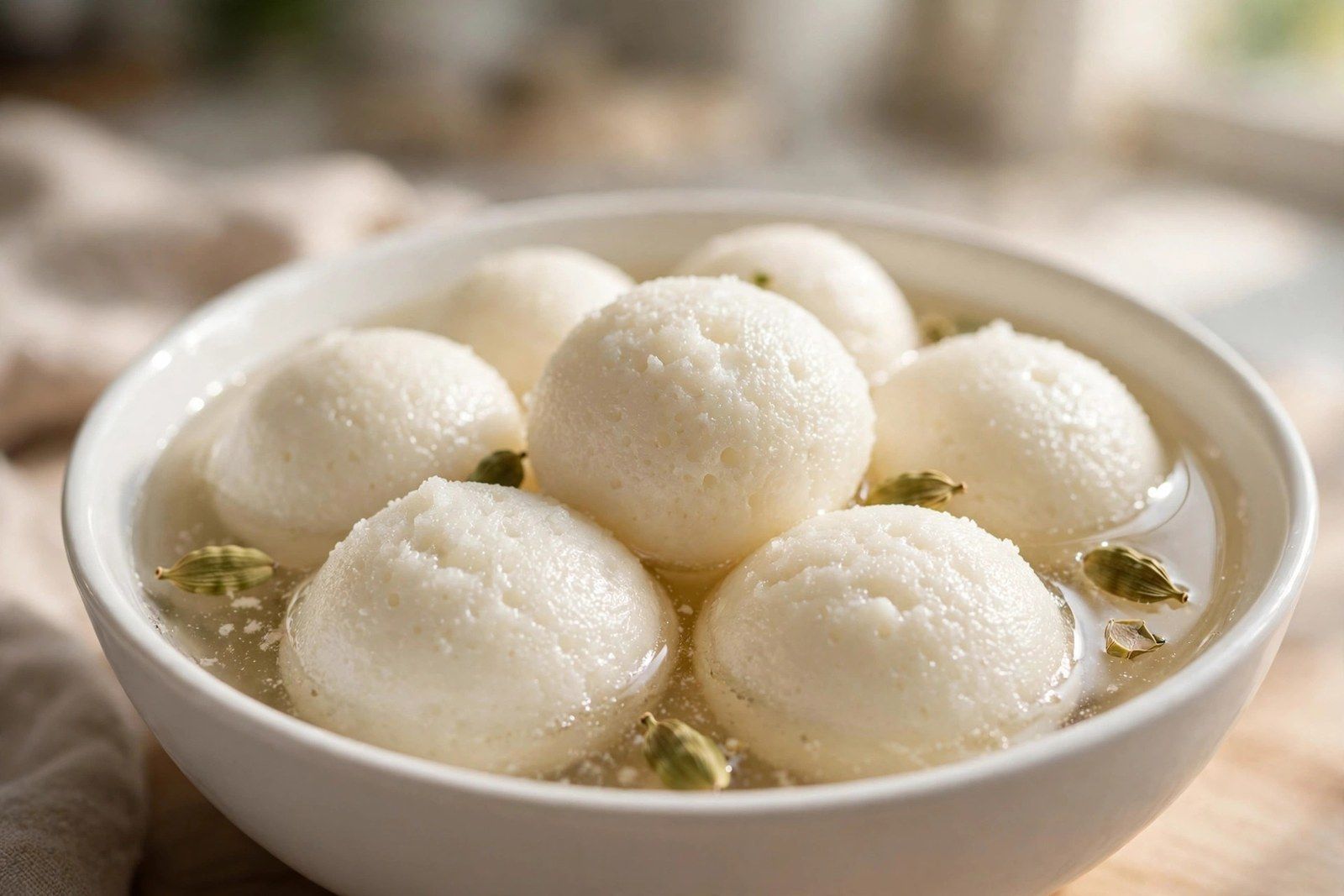
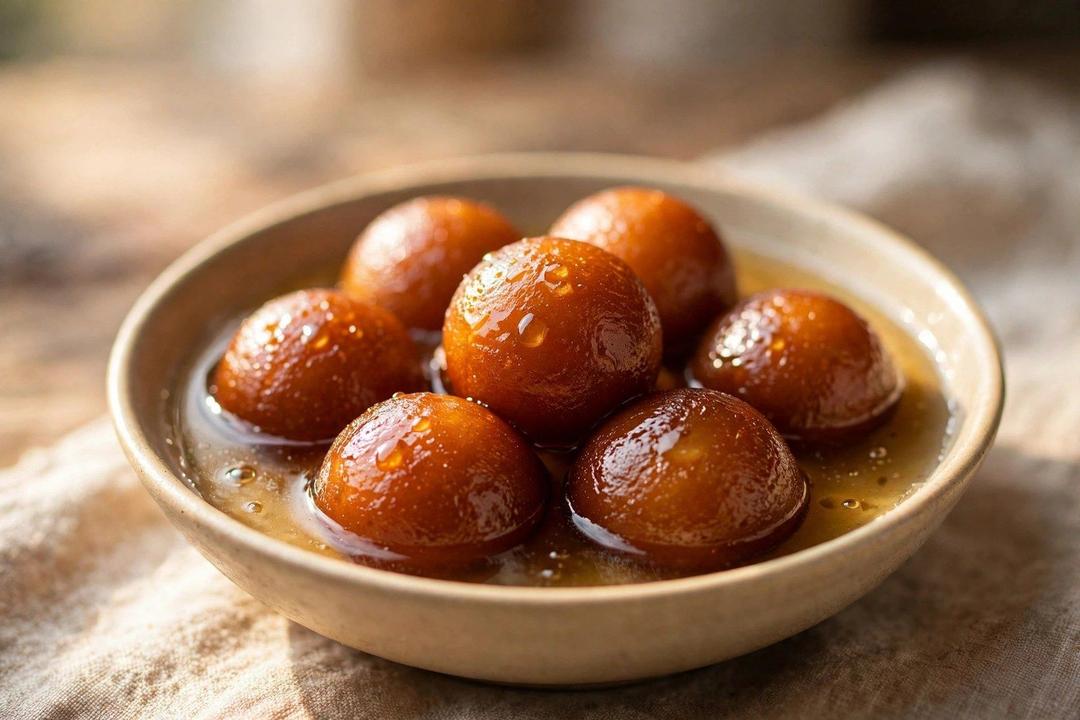
Roshogolla
Chenna
1 litre full-cream milk (cow's milk preferred)
2 tbsp lemon juice, or 1/2 cup curd, for curdling
Ice-cold water, for rinsing the chenna
Syrup
1.5 cups sugar
4 cups water
2-3 green cardamom pods, lightly crushed (optional)
1 tsp semolina (sooji) - traditional Bengali addition
Method
Bring the milk to a rolling boil in a heavy pot. Switch off the heat and add the lemon juice (or curd) a little at a time, stirring, until the milk curdles and the whey separates clear.
Pour in a cup of ice-cold water to stop the cooking, then strain through a muslin cloth. Rinse the chenna under cold water to wash off the lemony sourness.
Gather the cloth and hang it for 30-45 minutes until the chenna is just moist, not wet.
Turn the chenna onto a plate, add the semolina, and knead with the heel of your palm for 8-10 minutes until it becomes a smooth, grease-free dough. Roll into small, crack-free balls.
Boil the sugar, water and cardamom together to make a light syrup. Slide the balls in one by one; they will double in size.
Cook for 15-20 minutes on a steady boil, splashing in a spoon of water now and then to keep the syrup thin. The roshogollas are done when they sink slightly and spring back when pressed.
Cool completely in the syrup and serve at room temperature or chilled.
Sharing instead of copying keeps this library free.
Roshogolla is already one of Bengal's favourite treats for children - soft, syrupy and light. Serve one at room temperature after the bhog; no adaptation needed, though very small children do best with the smaller-sized balls.
“Kids love it” means flavors young taste buds enjoy — not safety for every child. Adults must supervise knives, heat and appliances — written for adults to prepare with children.
Storage & shelf life
Not available yet. We only show storage times backed by food-safety sources, and we haven’t verified this dish yet. If in doubt, throw it out.
Share a storage tip: coming soon
Story behind this dish
The modern white, spongy roshogolla was perfected in 1868 by Kolkata confectioner Nobin Chandra Das, who discovered that a pinch of semolina and boiling the chenna balls in syrup - rather than merely soaking them - kept them from collapsing. His family popularised it, and his son K.C. Das later canned it, carrying roshogolla across India and the world. The sweet became such a point of Bengali pride that when Odisha claimed its origin in 2015, West Bengal fought back and won the Geographical Indication tag for 'Banglar Rasogolla' in 2017 - one of the few foods in India with its origin settled by law.
Please read: this recipe is ai-assisted · human-reviewed · not kitchen-tested. It was researched with AI assistance, reviewed by a human, and never tested in a kitchen — times, temperatures and quantities may need adjusting. Always use a food thermometer and follow current guidance from authorities such as the USDA. If something looks or smells wrong, don’t eat it. Allergies: ingredient lists are informational and may be incomplete — read every product label yourself, and if you are unsure, don’t eat it. This is not medical or nutritional advice.
Tried it? Tell us.
Submissions are read by our team before anything appears publicly.
Comments
Public, checked by a moderator before they appear.