Bihar, IndiaAutumnSweetVegetarianFestiveKids love it
AI-assisted · Human-reviewed · Not kitchen-tested
Allergens: not checked yet. Read the ingredient list and every product label before cooking.
Sign in to save favorites. Sharing instead of copying keeps this library free.
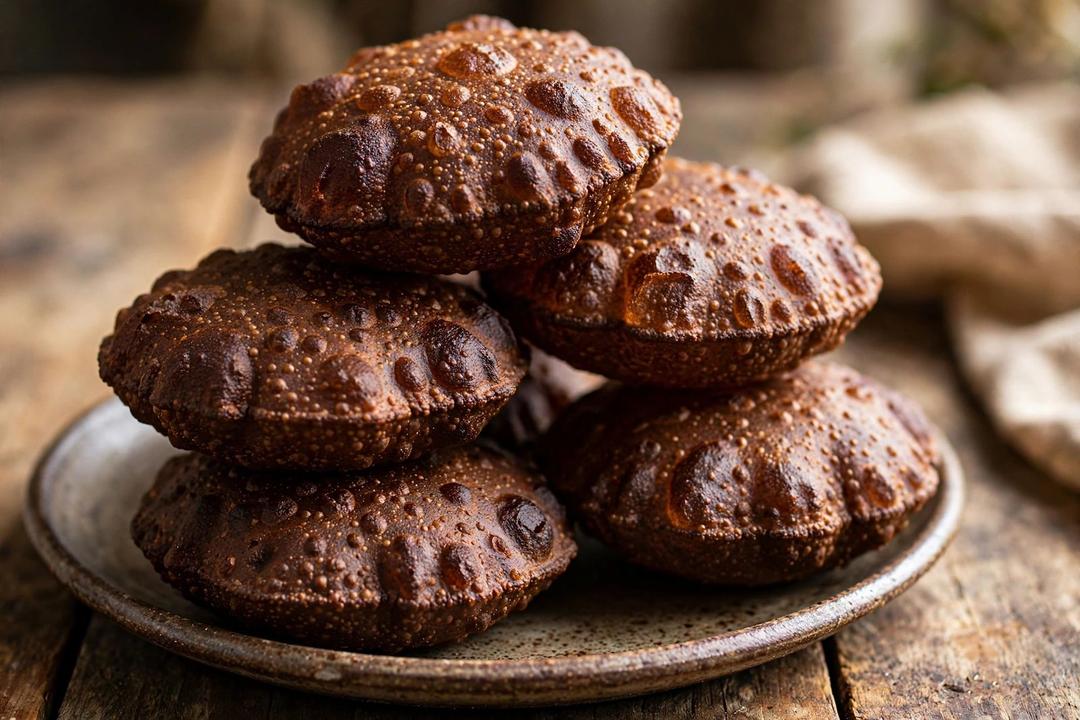
Thekua
Dough
2 cups (240 g) whole wheat flour (atta)
3/4 cup grated jaggery (gur)
1/3 cup water, for dissolving the jaggery
3 tbsp ghee (moyan), melted
2 tbsp grated dry coconut (optional)
1 tbsp fennel seeds (saunf), lightly crushed
1/2 tsp green cardamom powder
Ghee or oil, for deep frying
Method
Grate the jaggery and melt it in the water over low heat, stirring just until dissolved. Strain to remove impurities and let the syrup cool to lukewarm — hot syrup makes the dough sticky.
In a large bowl or platter, combine the whole wheat flour, coconut, fennel seeds and cardamom. Pour in the melted ghee and rub it into the flour with your palms until the mixture resembles coarse damp sand that clumps when pressed (the moyan step that gives thekua its crisp bite).
Add the lukewarm jaggery syrup a little at a time and knead into a firm, stiff dough — much firmer than chapati dough. Cover and rest 10-15 minutes.
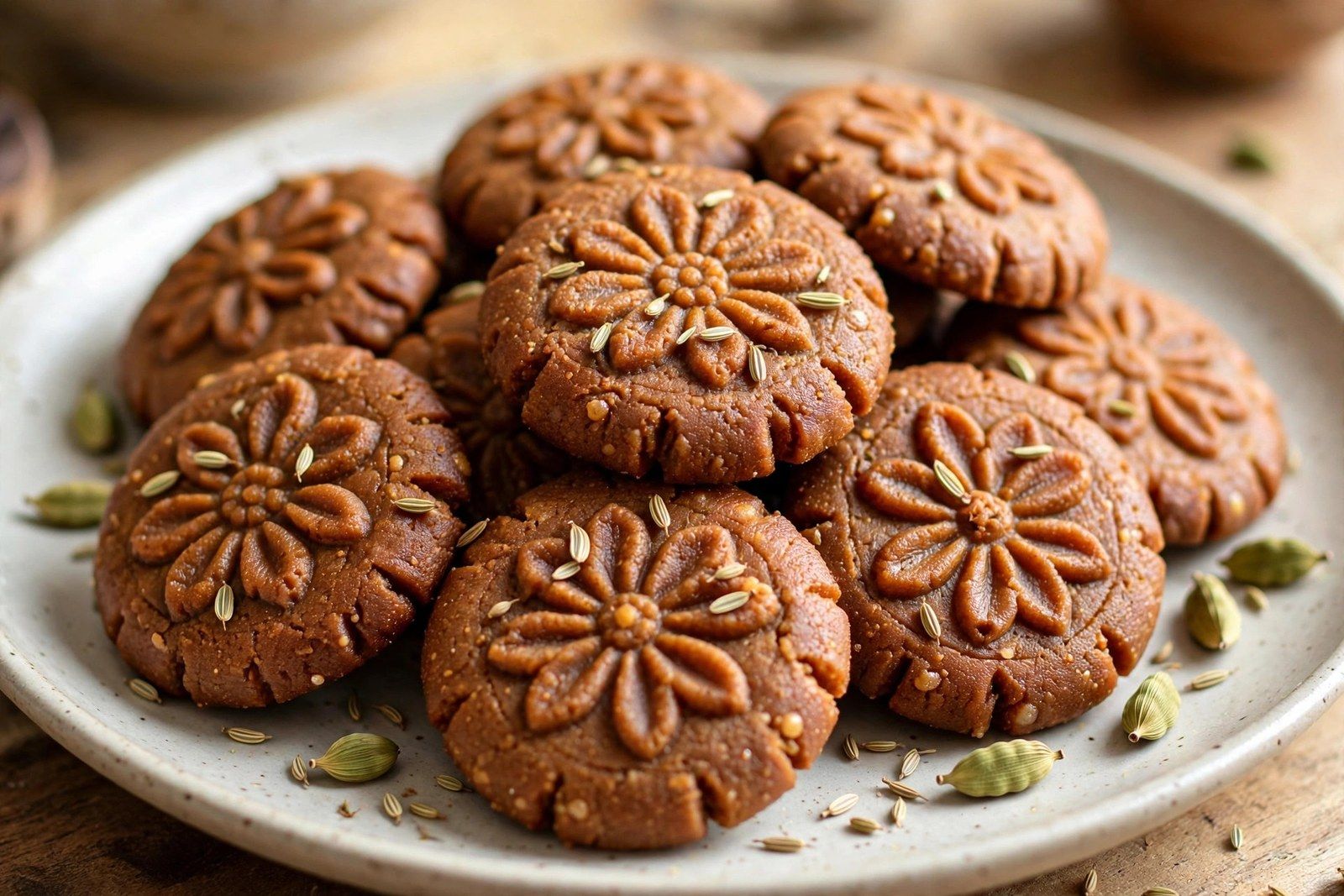
Pinch off lemon-sized balls, flatten them slightly, and press each into a greased wooden thekua mould (sancha) for the traditional floral pattern, or mark the top with a fork.
Heat ghee or oil in a kadhai over low-medium flame. Fry the thekuas in small batches, turning once, until deep golden brown and crisp on both sides. Low flame is essential so they cook through without burning.
Drain on a rack or paper towel. They crisp further as they cool, then keep for weeks in an airtight jar.
Sharing instead of copying keeps this library free.
Thekua needs no real adaptation for children — the same traditional prasad is what Bihari children eat during Chhath, broken into small bite-size pieces for little hands. Because it is made only of whole wheat, jaggery and ghee, parents share it with children as-is after it cools.
“Kids love it” means flavors young taste buds enjoy — not safety for every child. Adults must supervise knives, heat and appliances — written for adults to prepare with children.
Storage & shelf life
Not available yet. We only show storage times backed by food-safety sources, and we haven’t verified this dish yet. If in doubt, throw it out.
Share a storage tip: coming soon
Story behind this dish
In Bihar, thekua-making is a household ceremony, not just cooking: Zee Zest reports that prasad-making must happen strictly inside the home, with family members and neighbours pitching in, and many families still light a mitti ka chulha (clay stove) at home to preserve the sanctity of the prasad — thekua fried on a clay stove in a big cast-iron kadhai famously tastes better than the modern-stove version. The matriarch distributes thekua to everyone present through the four days, and relatives who could not attend receive a small consignment along with batasha (hard sugar wafers). Kept in airtight jars, thekua stays fresh for months — a practical prasad designed to travel.
Please read: this recipe is ai-assisted · human-reviewed · not kitchen-tested. It was researched with AI assistance, reviewed by a human, and never tested in a kitchen — times, temperatures and quantities may need adjusting. Always use a food thermometer and follow current guidance from authorities such as the USDA. If something looks or smells wrong, don’t eat it. Allergies: ingredient lists are informational and may be incomplete — read every product label yourself, and if you are unsure, don’t eat it. This is not medical or nutritional advice.
Tried it? Tell us.
Submissions are read by our team before anything appears publicly.
Comments
Public, checked by a moderator before they appear.