Home / Recipes / Western Cape, South Africa / Vegetarian Waterblommetjie Bredie
Vegetarian Waterblommetjie Bredie
Western Cape, South AfricaSpringMealVegetarianKids love it
AI-assisted · Human-reviewed · Not kitchen-tested
Allergens: not checked yet. Read the ingredient list and every product label before cooking.
Sign in to save favorites. Sharing instead of copying keeps this library free.
Vegetarian Waterblommetjie Bredie
Morning prep (first entry)
800 g–1 kg fresh waterblommetjies (Cape water flowers; 2 punnets; or 2 × 140 g tins, drained)
Cold water + 2 Tbsp salt, for soaking
Pot entry 1 — hard aromatics
3 Tbsp olive oil (or vegan margarine)
2 large onions, chopped
3 garlic cloves, crushed
1 tsp coriander seeds (koljana), crushed
4 whole cloves
1 small green chilli, slit (optional; omit for kids)
Pot entry 2 — hard vegetables
500 g potatoes, peeled and cut into chunky blocks
250 g brown mushrooms, quartered (meaty body of the stew)
500 ml vegetable stock
Pot entry 3 — delicate finish
Juice of 1 lemon + a little zest (or a handful of suring [wild sorrel], well washed and chopped — the traditional Cape souring herb)
Salt and cracked black pepper
Pinch of ground nutmeg
Fresh parsley, chopped, to garnish
To serve
Steamed white rice
Method
Morning: trim stalks and browned edges from the flowers, wash well, and soak in cold salted water for at least 3 hours (or overnight). Rinse thoroughly, swirl to dislodge grit, drain.
Heat the oil in a heavy pot. Fry the onions with the cloves until translucent and golden at the edges. Add garlic, crushed coriander seeds and chilli; stir 1 minute until fragrant.
Add the potatoes and mushrooms, toss to coat. Pour in the vegetable stock, cover, and simmer gently 25–30 minutes until the potatoes are nearly tender.
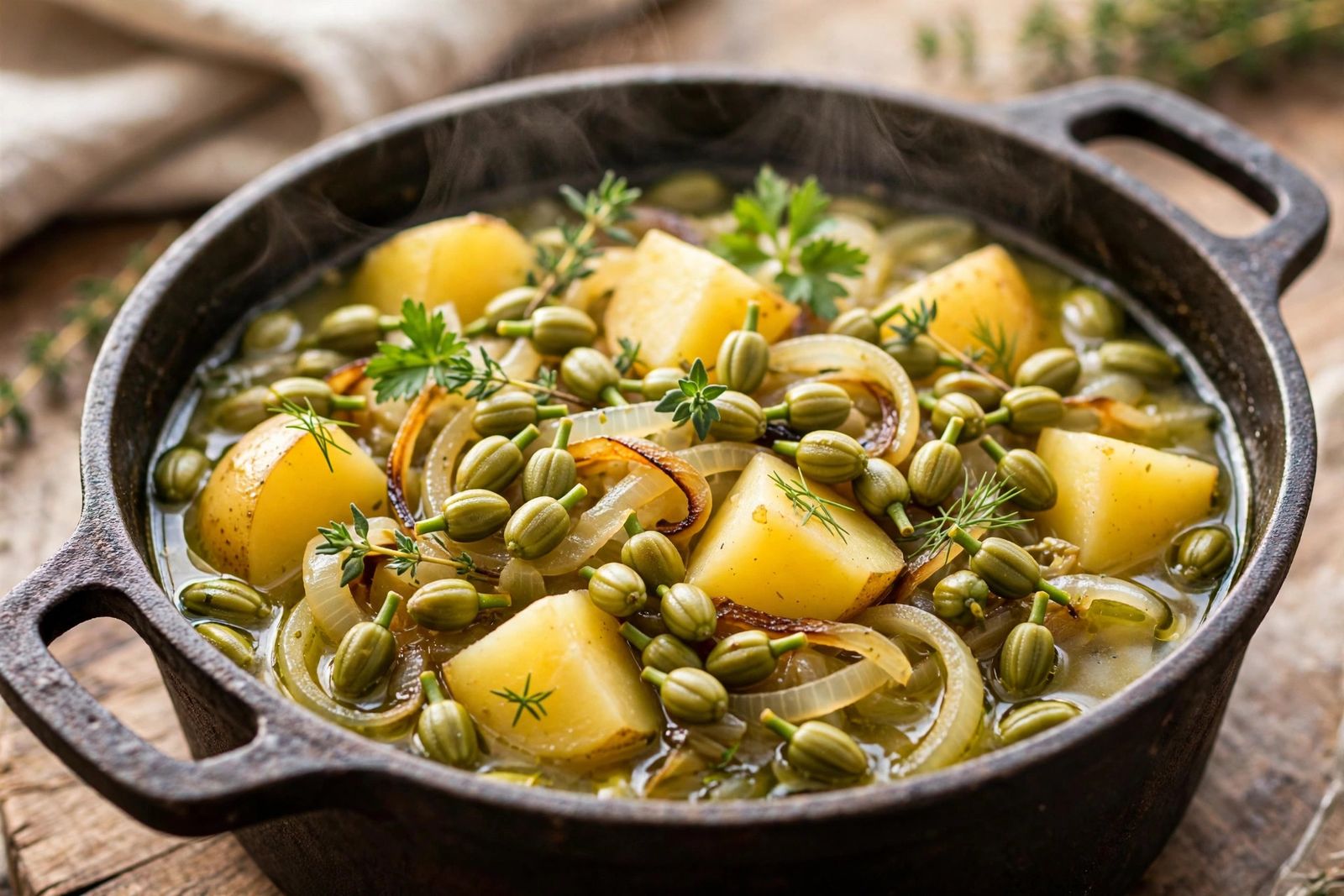
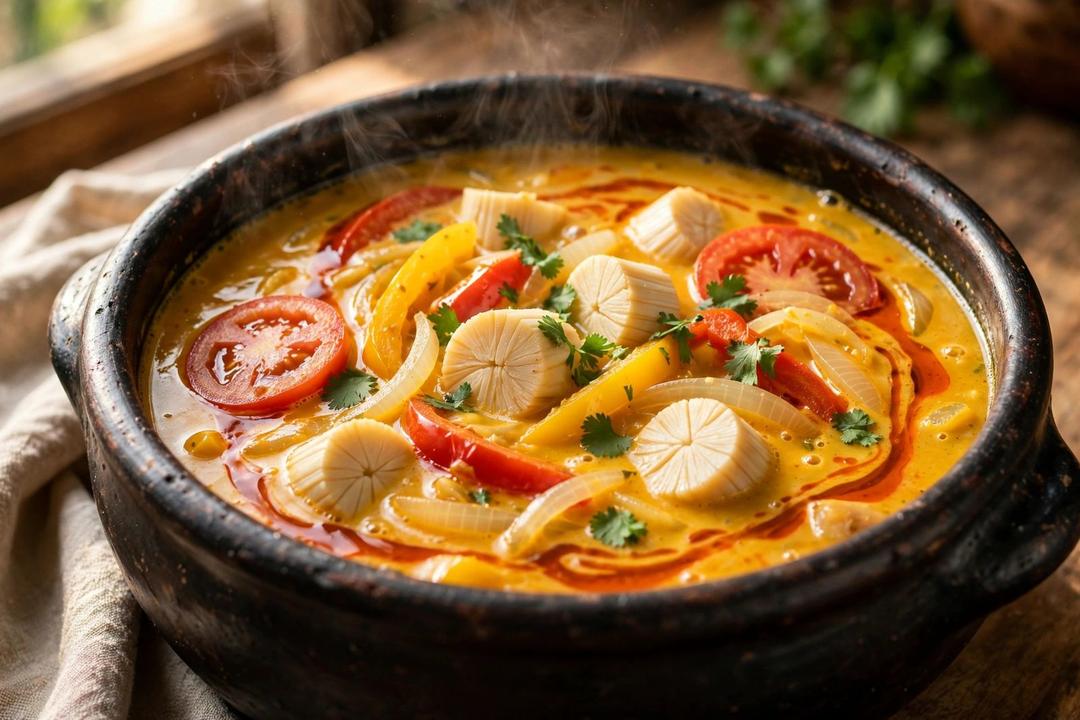
Add the drained waterblommetjies, stir through, cover and simmer 15–20 minutes more — done when the flowers still have a soft crunch, "resembling miniature artichoke leaves". Don't overcook.
Stir in the lemon juice and zest (or suring), nutmeg, salt and pepper. Rest 10 minutes off the heat. Serve over steamed rice with parsley.
Sharing instead of copying keeps this library free.
Omit the chilli entirely; add 1 extra potato cut smaller so it nearly melts into the stew; serve as "flower stew" over rice — kids love spotting the tiny white flowers. Start with half a lemon for little palates.
“Kids love it” means flavors young taste buds enjoy — not safety for every child. Adults must supervise knives, heat and appliances — written for adults to prepare with children.
Storage & shelf life
Not available yet. We only show storage times backed by food-safety sources, and we haven’t verified this dish yet. If in doubt, throw it out.
Share a storage tip: coming soon
Story behind this dish
Waterblommetjies were gathered and eaten by the indigenous Khoikhoi long before Jan van Riebeeck arrived in 1652; early settlers and their enslaved workers learnt from the Khoikhoi that these pond flowers were edible. The dish is a three-culture fusion: the Dutch slow-stewing method, the spices of enslaved people from the East, and the indigenous Khoisan ingredient. It remains the Boland's beloved late-winter/early-spring ritual, celebrated at the annual Waterblommetjie Festival.
Please read: this recipe is ai-assisted · human-reviewed · not kitchen-tested. It was researched with AI assistance, reviewed by a human, and never tested in a kitchen — times, temperatures and quantities may need adjusting. Always use a food thermometer and follow current guidance from authorities such as the USDA. If something looks or smells wrong, don’t eat it. Allergies: ingredient lists are informational and may be incomplete — read every product label yourself, and if you are unsure, don’t eat it. This is not medical or nutritional advice.
Tried it? Tell us.
Submissions are read by our team before anything appears publicly.
Comments
Public, checked by a moderator before they appear.