Home / Recipes / Rhineland, Germany, and Vienna, Austria / Martinsgans (St. Martin's Roast Goose)

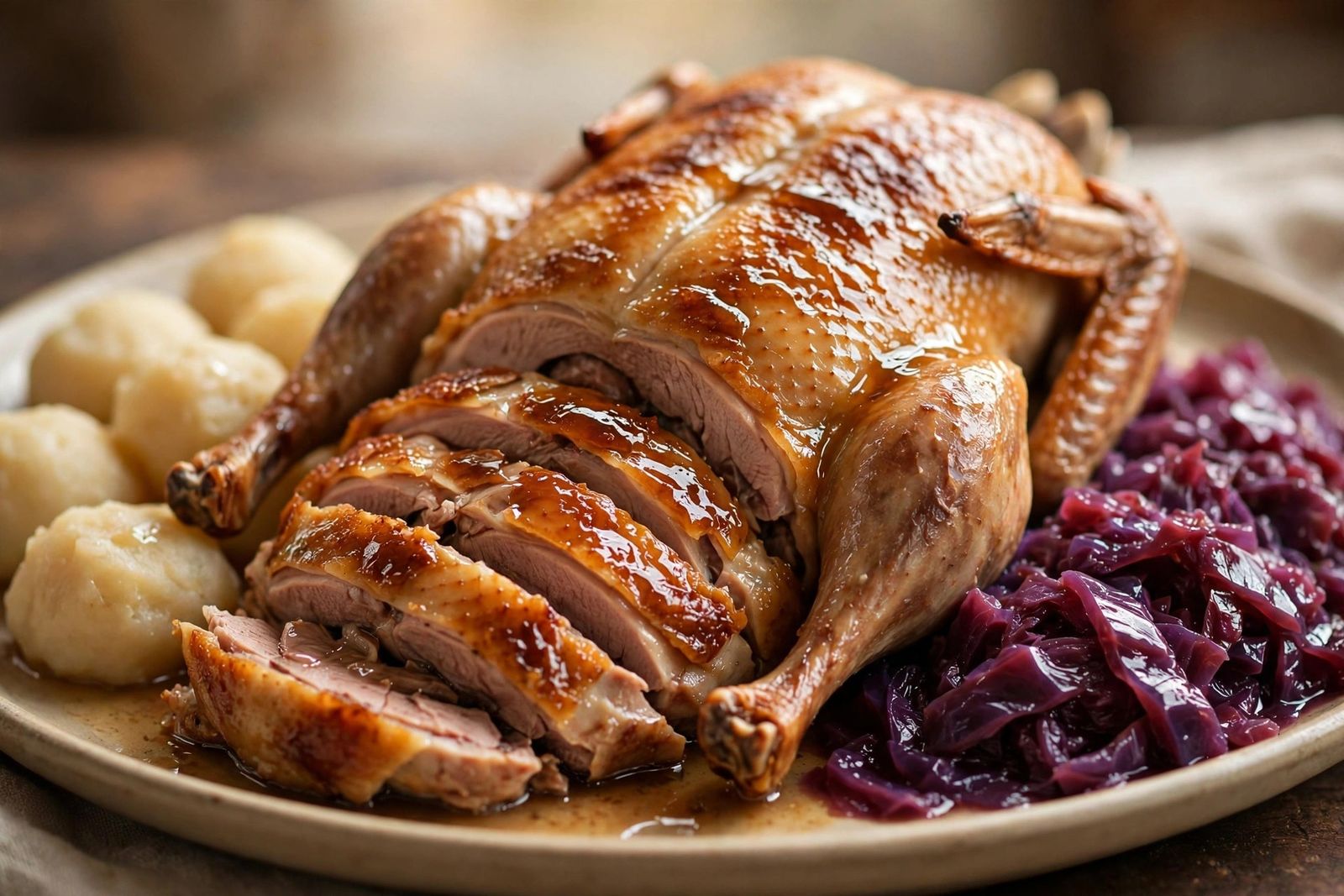
Martinsgans (St. Martin's Roast Goose)

Also known as Martinigansl in Rhineland, Germany, and Vienna, Austria

Rhineland, Germany, and Vienna, AustriaAutumnMealMeat & SeafoodFestiveKids love it

AI-assisted · Human-reviewed · Not kitchen-tested

Allergens: not checked yet. Read the ingredient list and every product label before cooking.

Sign in to save favorites. Sharing instead of copying keeps this library free.

Martinsgans (St. Martin's Roast Goose)

Martinsgans (St. Martin's Roast Goose)

Goose and filling

  • 1 oven-ready goose (the source gives no weight; size it to your guests and oven)
  • 1 onion, cut into coarse chunks
  • 1 orange, cut into coarse chunks
  • 2 apples, cut into coarse chunks
  • 1 garlic clove, finely chopped
  • Dried or fresh marjoram
  • Salt and pepper
  • Water, for the roasting dish

Served with

  • Rotkohl (red cabbage), see separate recipe
  • Kartoffelknödel (potato dumplings), see separate recipe

Method

  1. Mix the onion, orange, apple and garlic with marjoram, salt and pepper to make the filling.
  2. Put the goose in a roasting dish, season with salt and pepper, and stuff it with some of the filling.
  3. Turn the goose over, season the underside with salt and pepper, add the rest of the filling around it, and pour water over.
  4. Roast at 140 C for about 45 minutes.
  5. Take it out, turn the goose back over and pour off the excess fat and liquid.
  6. Return it to the oven at 160 C for about 1 1/2 hours until done; check that the juices run clear and the thickest part is cooked through.
  7. Serve with the dumplings and red cabbage, spooning the pan juices over.

Sharing instead of copying keeps this library free.

Something went wrong? Rescue this dish3 fixes

Storage & shelf life

Not available yet. We only show storage times backed by food-safety sources, and we haven’t verified this dish yet. If in doubt, throw it out.

Share a storage tip: coming soon

Story behind this dish

Legend says St. Martin of Tours, feeling unworthy, hid in a goose pen to avoid being made bishop, and the geese cackled and gave him away. A writer in Germany quoted by Living Lutheran calls this the less likely explanation: St. Martin's Day ended the peasants' working year, farmhands often received a goose as a bonus, and the grass-fed geese were nearing the end of their season. He adds that the St. Martin's goose custom is much older than eating goose at Christmas.

Please read: this recipe is ai-assisted · human-reviewed · not kitchen-tested. It was researched with AI assistance, reviewed by a human, and never tested in a kitchen — times, temperatures and quantities may need adjusting. Always use a food thermometer and follow current guidance from authorities such as the USDA. If something looks or smells wrong, don’t eat it. Allergies: ingredient lists are informational and may be incomplete — read every product label yourself, and if you are unsure, don’t eat it. This is not medical or nutritional advice.

Tried it? Tell us.

★★★★★

Submissions are read by our team before anything appears publicly.

Comments

Public, checked by a moderator before they appear.

Editing comments and view counts: coming soon.

Recipe adapted from: Vienna Tourist Board - Martini Goose (Martinigansl) recipe Living Lutheran - Reader recipe: St. Martin's goose (Martinsgans) Wikipedia - St. Martin's Day Historic UK - Martinmas — rewritten in our own words.

Keep exploring

Related recipes

Same region first, then the same season.

Rotkohl (Sweet-and-Sour Red Cabbage)

Rotkohl (Sweet-and-Sour Red Cabbage)

Germany

Also known as Blaukraut in Germany (Rotkohl in the north, Blaukraut in Bavaria and the south)
MealVegetarian
Kartoffelknödel (Potato Dumplings)

Kartoffelknödel (Potato Dumplings)

Germany

Also known as Kartoffelklöße in Bavaria, Germany, and Austria
MealVegetarian
Weckmann

Weckmann

Germany

Also known as Stutenkerl in Rhineland, Germany
SweetContains egg