Home / Recipes / Ethiopia / Misir Wot — Ethiopian red lentil stew with berbere
Misir Wot — Ethiopian red lentil stew with berbere
EthiopiaAutumnMealVegetarianKids love it
AI-assisted · Human-reviewed · Not kitchen-tested
Allergens: not checked yet. Read the ingredient list and every product label before cooking.
Sign in to save favorites. Sharing instead of copying keeps this library free.
Misir Wot — Ethiopian red lentil stew with berbere
Cooking fat (first in)
2 tbsp niter kibbeh [Ethiopian spiced clarified butter — butter simmered with ginger, garlic, korarima (Ethiopian cardamom), fenugreek, and turmeric, then strained]
Fasting-table variation (traditional): replace with an equal amount of neutral oil or olive oil — during Orthodox fasting periods (tsom), observant cooks make the same wot with oil instead of butter; that is the authentic vegan form. Either fat is traditional; this recipe uses niter kibbeh.
Aromatics + spices (bloomed in the fat)
1 large yellow onion (about 150 g), finely chopped
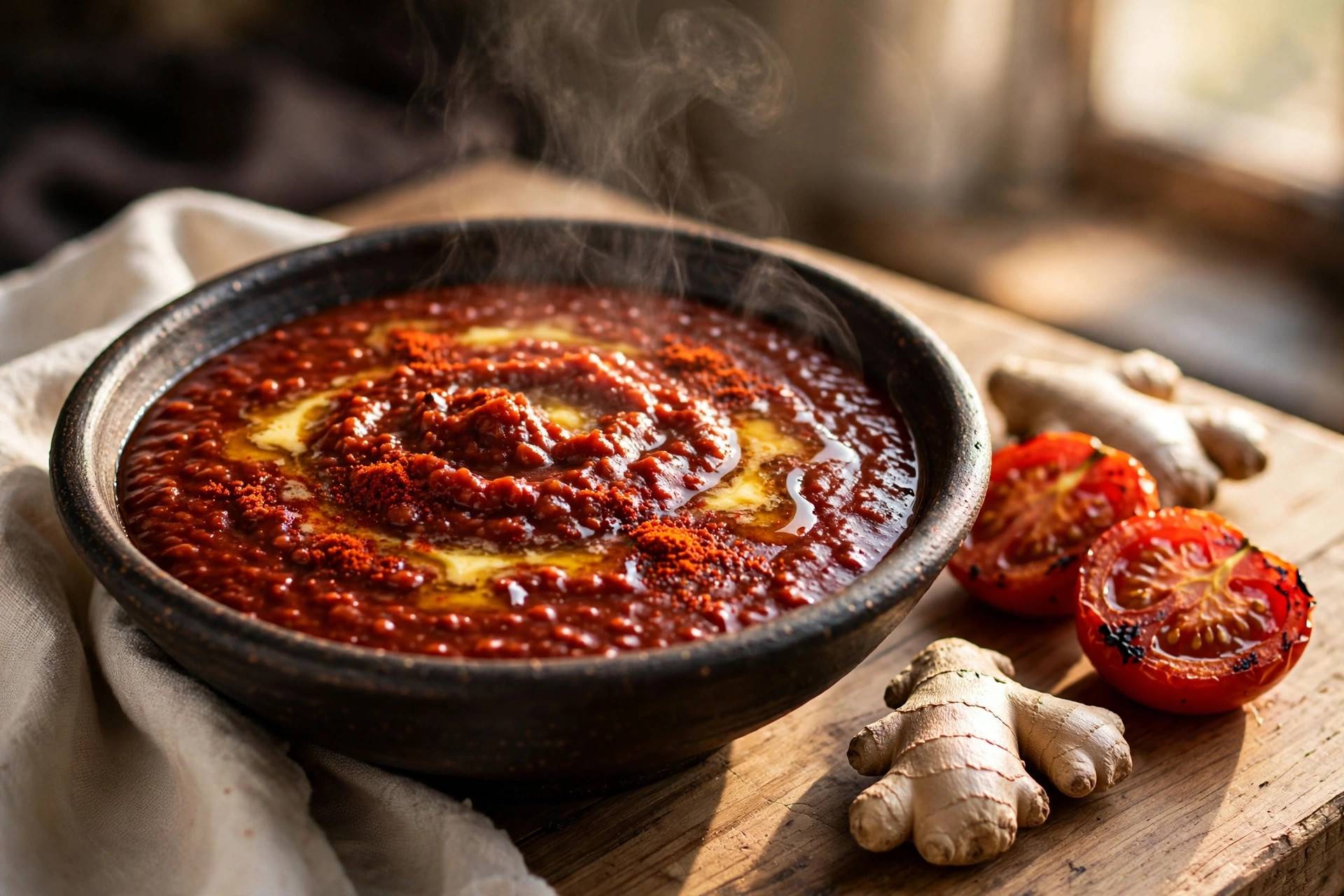
2 tbsp berbere [Ethiopian spice blend — fiery, earthy, aromatic; the soul of the dish] (see homemade blend below, or good store-bought; heat varies by brand — start at 1.5 tbsp if heat-shy)
1 small tomato (about 100 g), finely chopped, or 1 tbsp tomato paste — the softening, sweetening agent in wot
Lentils + liquid (the body of the stew)
1½ cups (300 g) misir [red lentils — the small, orange, quick-cooking lentil], picked over and rinsed until the water runs clear (no splitting needed; they disintegrate into the stew's creamy body)
3 cups water (plus more as needed) — no stock needed; the spices carry the flavor
1 tsp fine sea salt, plus more to taste
Finishing
1 tsp sweet paprika — dried sweet red pepper powder; no heat, purely for the signature deep red color
Squeeze of lime or lemon juice (about 1 tsp) — brightens the finished stew
To serve: injera [Ethiopian sourdough flatbread, traditionally made from teff grain — spongy, tangy, used as both plate and utensil]; rice or any flatbread works as a substitute
Berbere blend — spelled out (makes about ½ cup; keeps 6 months airtight)
4 tsp coriander seeds
2 tsp cumin seeds
2 tsp fenugreek seeds [small, bitter-sweet, maple-scented seeds — the defining note of berbere]
2 tsp black peppercorns
2 tsp green cardamom pods, seeds only (or a pinch of korarima [Ethiopian cardamom] if available)
10 whole cloves
2 tsp cayenne powder [dried hot red chili]
6 tbsp sweet paprika
1 tsp ground ginger
1 tsp ground cinnamon
½ tsp ground nutmeg
2 tsp ground turmeric
2 tsp fine salt
Method: toast the whole seeds (coriander, cumin, fenugreek, peppercorns, cardamom, cloves) in a dry skillet 2–3 minutes until fragrant, cool, then grind to a fine powder. Whisk in the pre-ground spices and salt. Store airtight in a cool, dark place. Store-bought note: a good-quality berbere from an Ethiopian/Eritrean grocer is fully traditional and saves the work.
Method
Rinse the misir [red lentils] in several changes of cold water until the water runs clear; drain and set aside.
Melt the niter kibbeh [spiced clarified butter] in a heavy pot or Dutch oven over medium heat. Add the finely chopped onion and cook, stirring often, 6–8 minutes until soft, golden, and translucent. Patience here builds the stew's sweetness — do not rush to brown.
Stir in the garlic and ginger; cook 1 minute until fragrant. Add the berbere [Ethiopian spice blend] and the chopped tomato (or tomato paste); stir well and cook 3–4 minutes, splashing in 2–3 tbsp water as needed so the spices toast without scorching. The mixture should turn a deep, glossy red.
Stir in the rinsed lentils and salt, coating them in the spice base. Pour in the 3 cups water and bring to a gentle boil.
Reduce to low, partially cover, and simmer 30–40 minutes, stirring every 5–10 minutes and adding water a splash at a time if it thickens too fast. The lentils should lose their shape entirely and the stew should be thick and porridge-like, deep red.
Stir in the sweet paprika and the squeeze of lime/lemon juice. Taste for salt; adjust. Rest 5 minutes off the heat — the stew thickens as it cools.
Ladle over or alongside injera [sourdough flatbread], family-style. Traditionally eaten communally, scooped up with torn pieces of injera.
Sharing instead of copying keeps this library free.
The mild family pot: Ethiopian children grow up eating misir wot from the shared platter — families simply hold back the heat, making the same stew with only 1 tsp berbere (skip the cayenne in the homemade blend) and relying on sweet paprika for the familiar red color. Allergy: legumes (red lentils); dairy via niter kibbeh (the traditional oil/fasting variation is dairy-free). Naturally gluten-free.
“Kids love it” means flavors young taste buds enjoy — not safety for every child. Adults must supervise knives, heat and appliances — written for adults to prepare with children.
Storage & shelf life
Not available yet. We only show storage times backed by food-safety sources, and we haven’t verified this dish yet. If in doubt, throw it out.
Share a storage tip: coming soon
Story behind this dish
Ethiopia's Orthodox Church observes some 180 mandatory fasting days a year — the strictest fasting calendar of any church — during which observant Ethiopians eat no meat, dairy, or eggs. That is why Ethiopian cuisine has one of the world's deepest vegetarian repertoires, and lentil stews like misir wot sit at the very center of the fasting table, ladled onto shared injera platters. With lentils coming out of the ground in September–October, early October is when the new harvest meets the fasting table.
Please read: this recipe is ai-assisted · human-reviewed · not kitchen-tested. It was researched with AI assistance, reviewed by a human, and never tested in a kitchen — times, temperatures and quantities may need adjusting. Always use a food thermometer and follow current guidance from authorities such as the USDA. If something looks or smells wrong, don’t eat it. Allergies: ingredient lists are informational and may be incomplete — read every product label yourself, and if you are unsure, don’t eat it. This is not medical or nutritional advice.
Tried it? Tell us.
Submissions are read by our team before anything appears publicly.
Comments
Public, checked by a moderator before they appear.