Home / Recipes / Lebanon / Mujadara — Lebanese lentils-and-rice with caramelized onions
Mujadara — Lebanese lentils-and-rice with caramelized onions
LebanonAutumnMealVegetarianKids love it
AI-assisted · Human-reviewed · Not kitchen-tested
Allergens: not checked yet. Read the ingredient list and every product label before cooking.
Sign in to save favorites. Sharing instead of copying keeps this library free.
Mujadara — Lebanese lentils-and-rice with caramelized onions
The lentils (first in — the base)
1½ cups brown lentils [whole masoor dal — small brown lentils that hold their shape; NOT red lentils], rinsed and picked over
4½ cups water
The rice (in once the lentils are half-tender)
1 cup long-grain rice (basmati works), rinsed
1½ tsp fine sea salt
1 tsp ground cumin [warm, earthy spice]
½ tsp ground allspice [behar helou — sweet-pungent Levantine spice]
¼ tsp ground cinnamon
½ tsp black pepper
The onions (caramelized separately — the crown of the dish)
3 large yellow onions, halved and thinly sliced
⅓ cup olive oil, plus 2 tbsp more for the pot
To serve
Plain whole-milk yogurt, for passing at the table
Lemon wedges
Warm pita bread
Method
Put the lentils and water in a heavy pot. Bring to a boil, then lower to a steady simmer and cook 15 minutes — the lentils should be half-tender, still holding their shape.
Stir in the rice, salt, cumin, allspice [behar helou], cinnamon, and pepper. Add the 2 tbsp olive oil. Return to a gentle boil, then cover, lower the heat, and cook 18–20 minutes until the rice is tender and the water is absorbed. Rest covered 10 minutes off the heat.
While the pot simmers, caramelize the onions: heat the ⅓ cup olive oil in a wide skillet over medium-high heat. Add the sliced onions with a pinch of salt and cook, stirring every few minutes, 20–25 minutes until deep golden-brown and sweet — not pale, not burnt. (A splash of water loosens any sticking.)
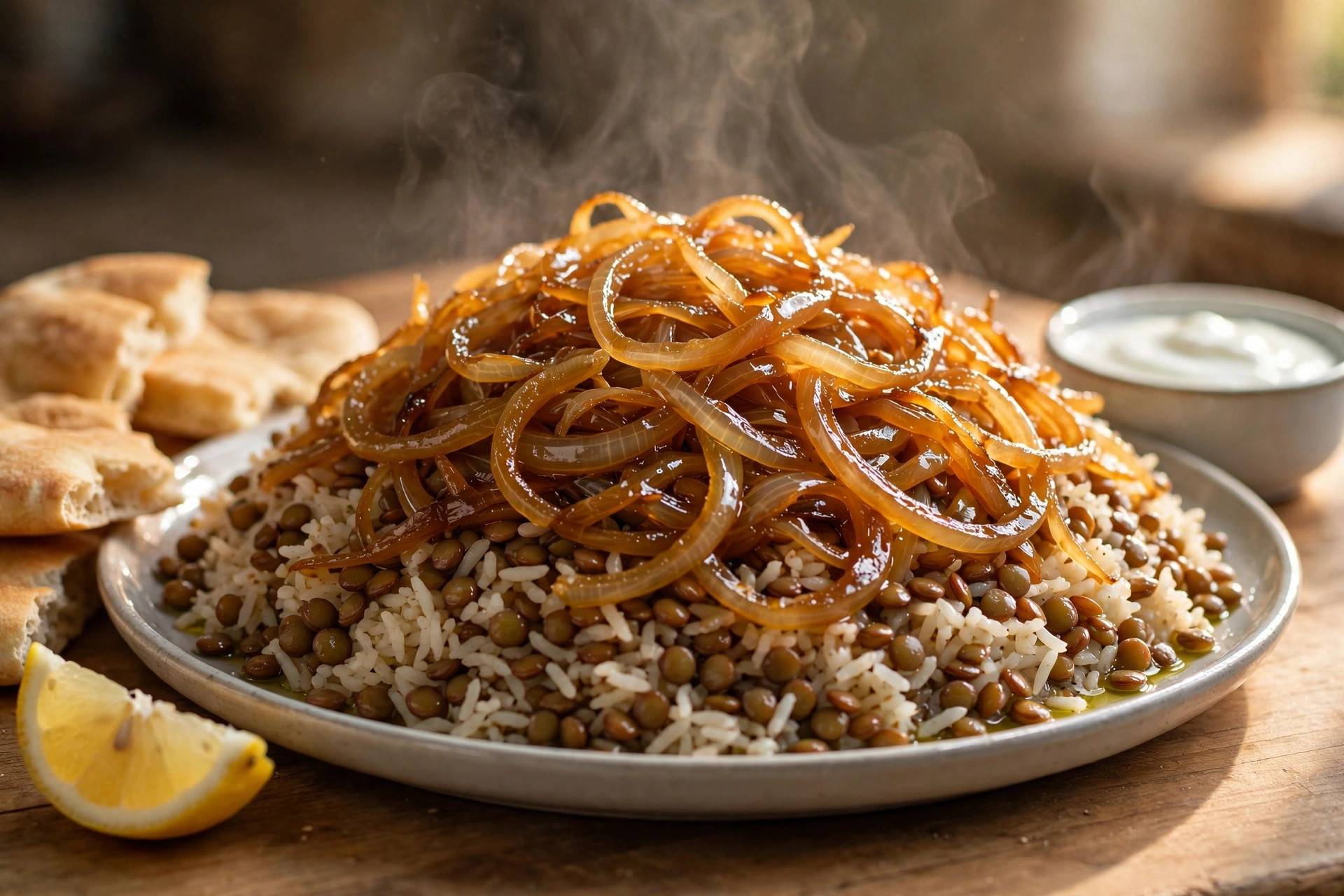
Fluff the lentils and rice with a fork and pile onto a wide platter. Crown generously with the caramelized onions and their oil.
Serve warm or at room temperature with yogurt, lemon wedges, and pita — each diner spoons yogurt over their own portion.
Sharing instead of copying keeps this library free.
Mujadara is everyday Lebanese family food — children eat the same dish, drawn by the sweet caramelized onions, with yogurt spooned over. No separate kid recipe needed. Allergy: naturally gluten-free; dairy only if yogurt is served (skip it for dairy-free — the dish itself is vegan).
“Kids love it” means flavors young taste buds enjoy — not safety for every child. Adults must supervise knives, heat and appliances — written for adults to prepare with children.
Storage & shelf life
Not available yet. We only show storage times backed by food-safety sources, and we haven’t verified this dish yet. If in doubt, throw it out.
Share a storage tip: coming soon
Story behind this dish
Mujadara is one of the oldest recorded dishes in Arab cooking — a lentil-and-grain dish appears in the 13th-century Kitab al-Tabikh (Book of Dishes) of Baghdad, and the dish is often linked to the biblical 'mess of pottage.' Known across the Levant as the poor man's feast, it fed families through Lent and lean months on nothing but lentils, rice, and onions — and its Arab proverb is famous: 'hunger makes even mujadara taste like meat.' The caramelized onion crown is the whole point: patience turned into sweetness.
Please read: this recipe is ai-assisted · human-reviewed · not kitchen-tested. It was researched with AI assistance, reviewed by a human, and never tested in a kitchen — times, temperatures and quantities may need adjusting. Always use a food thermometer and follow current guidance from authorities such as the USDA. If something looks or smells wrong, don’t eat it. Allergies: ingredient lists are informational and may be incomplete — read every product label yourself, and if you are unsure, don’t eat it. This is not medical or nutritional advice.
Tried it? Tell us.
Submissions are read by our team before anything appears publicly.
Comments
Public, checked by a moderator before they appear.