¼ cup golab [rosewater] (rose-petal distillate — a fragrant liquid made by steaming rose petals)
½ cup khalal-e badam [slivered almonds]
2 tablespoons neutral cooking oil, warmed (traditional; gives the surface its sheen)
To serve
Ground darcheen [cinnamon] — for the classic calligraphy patterns
2 tablespoons chopped pesteh [pistachios]
2 tablespoons slivered almonds + a few dried rose petals (optional)
Method
Put the rinsed rice and 8 cups water in a large heavy pot with the salt. Bring to a boil, skim the white foam as it rises. Cover and simmer on medium-low 35–45 minutes until the grains have completely collapsed and turned mushy — you should barely see whole grains. Stir occasionally so it doesn't catch. Add the extra 2 cups of hot water if the pot runs dry.
Meanwhile bloom the saffron: grind the threads in a mortar to a powder (grinding releases far more colour and aroma than whole threads) and dissolve in 2 tablespoons of hot water — it will turn a deep amber-red.
Stir the sugar into the soft rice. Simmer 20–25 minutes more, stirring occasionally, until the sugar fully dissolves and the mixture thickens. Gentle strokes, not vigorous beating — that keeps the silky texture.
Stir in the bloomed saffron water (watch it turn sunset-gold), the warmed oil, almonds, cardamom, and rosewater. Mix well, cover, and simmer on low 15–20 minutes until it holds its shape like a soft pudding when spooned. Rosewater always goes in last — its perfume evaporates in long cooking.
Immediately spoon into a large shallow serving dish or individual bowls. Chill at least 2 hours (it firms up and the flavours settle). Traditionally served cold, though warm is also eaten.
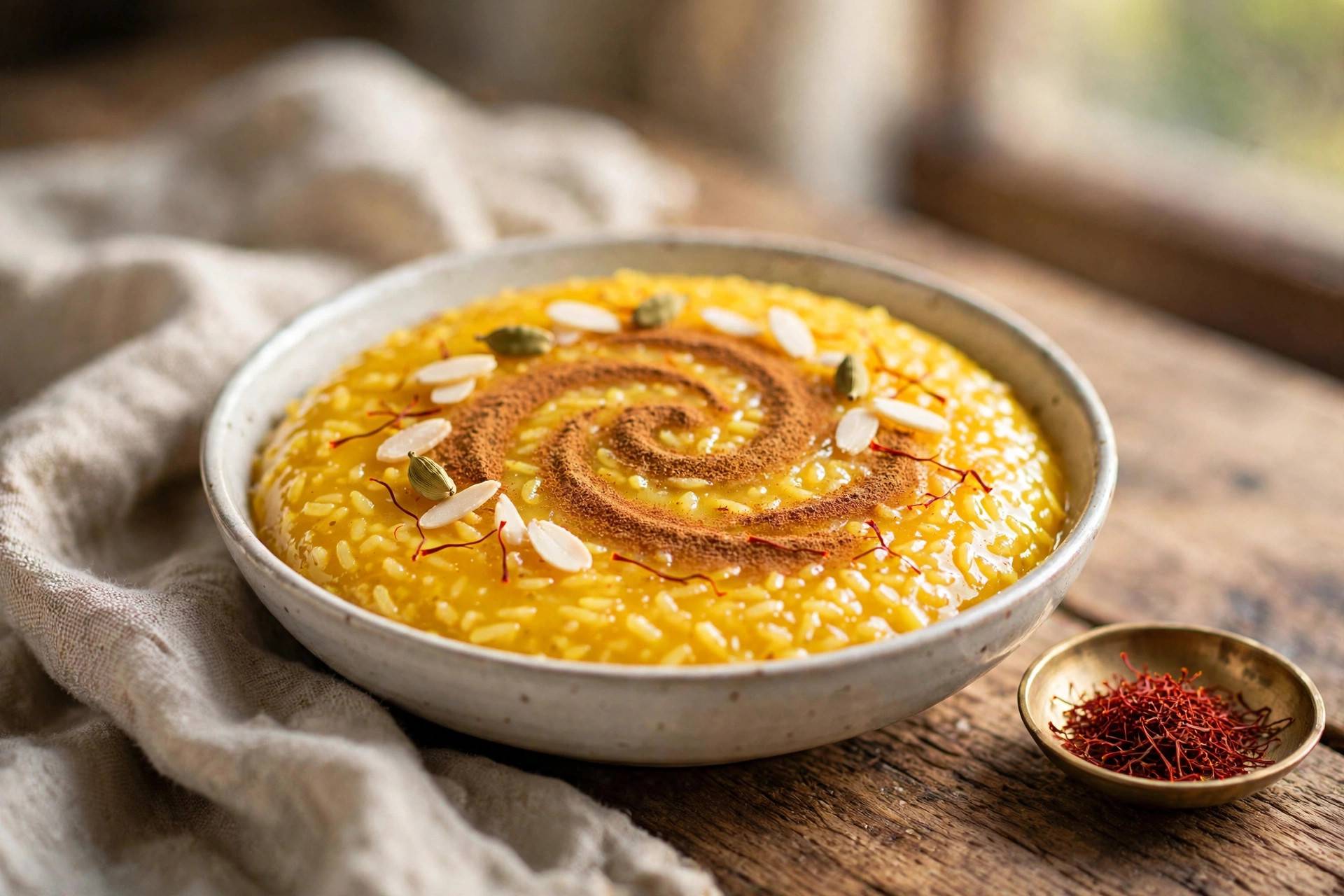
Dust cinnamon through a stencil to write names or geometric patterns, and scatter pistachios, almonds, and rose petals.
Sharing instead of copying keeps this library free.
There is no distinct kid recipe — sholeh zard is itself a classic childhood dessert in Iranian homes. Children eat exactly the same dish, portioned smaller into little bowls.
“Kids love it” means flavors young taste buds enjoy — not safety for every child. Adults must supervise knives, heat and appliances — written for adults to prepare with children.
Storage & shelf life
Not available yet. We only show storage times backed by food-safety sources, and we haven’t verified this dish yet. If in doubt, throw it out.
Share a storage tip: coming soon
Story behind this dish
In Iran, sholeh zard is famously cooked as nazri (votive/charity food): families make a whole pot to fulfil a nazr (religious vow) — giving thanks for health or an answered prayer — and distribute the bowls free to neighbours, often hand-delivering them door to door. It is a staple of Ramadan iftar (the meal breaking the day's fast) and of Muharram mourning ceremonies, served free to mourners. The cinnamon decoration is itself ritual: names and geometric patterns stencilled in cinnamon onto the surface. TasteAtlas named it the best pudding in the world by audience vote.
Please read: this recipe is ai-assisted · human-reviewed · not kitchen-tested. It was researched with AI assistance, reviewed by a human, and never tested in a kitchen — times, temperatures and quantities may need adjusting. Always use a food thermometer and follow current guidance from authorities such as the USDA. If something looks or smells wrong, don’t eat it. Allergies: ingredient lists are informational and may be incomplete — read every product label yourself, and if you are unsure, don’t eat it. This is not medical or nutritional advice.
Tried it? Tell us.
Submissions are read by our team before anything appears publicly.
Comments
Public, checked by a moderator before they appear.