1 tsp vainilla [vanilla extract] (the traditional flavoring per the Montevideo guide)
A good pinch of salt
For cooling
Parchment paper or a lightly oiled baking tray
Method
Line a baking tray with parchment paper and set it aside.
Combine the peanuts, sugar, water, vanilla and salt in a large heavy skillet. Set over medium heat and stir continuously — the sugar dissolves and the mixture comes to a gentle boil.
Keep stirring as the water evaporates. The syrup will seize and turn sandy-crystalline around the peanuts — this is supposed to happen; do not stop.
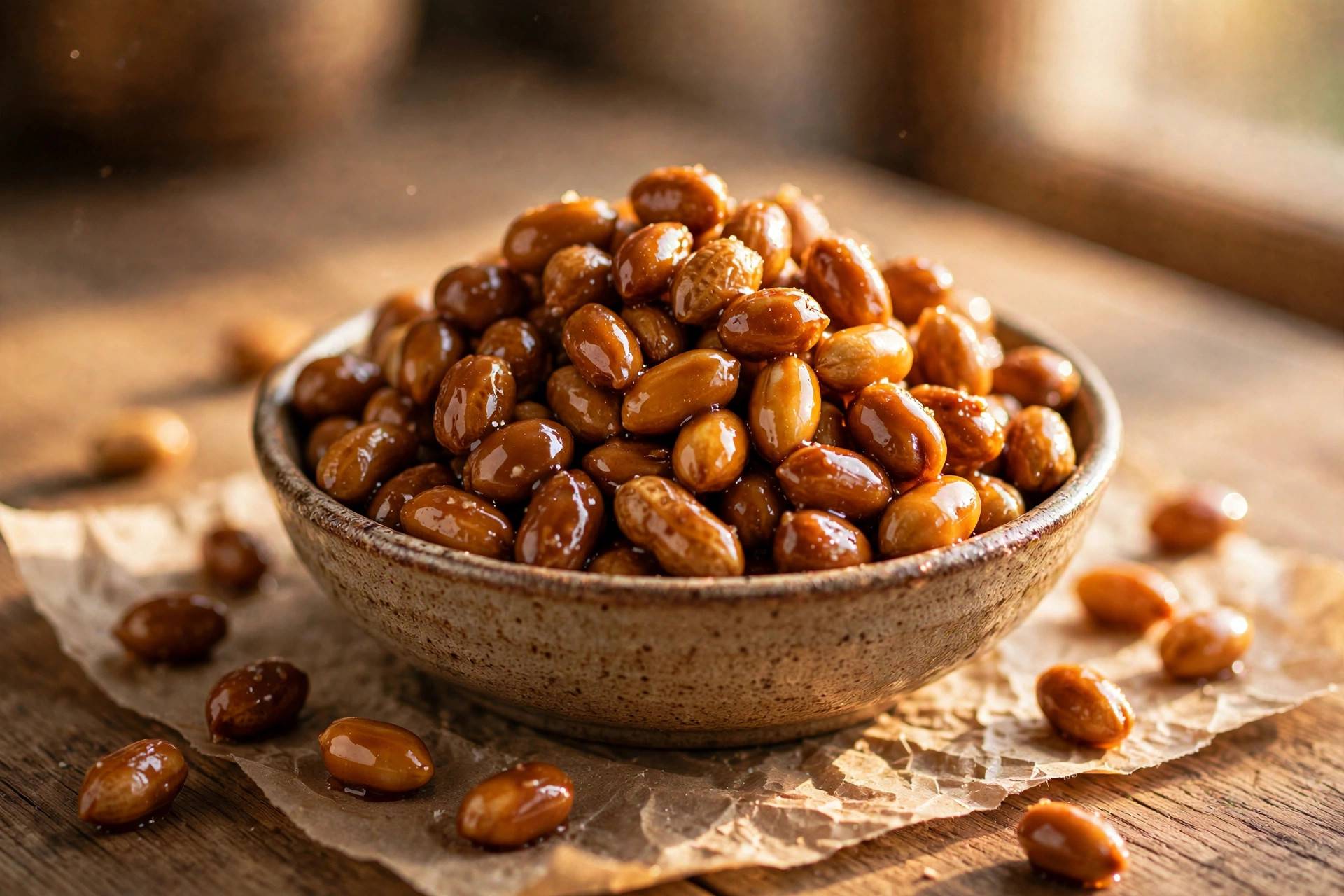
Lower the heat slightly and keep stirring: the crystallized sugar melts again into a golden, glossy caramel that coats every peanut. Stop when the coating is deep amber, not dark.
Immediately scrape onto the parchment tray, separate the peanuts quickly with a spatula, and let cool completely. Break apart into individual pieces. Store in an airtight jar.
Sharing instead of copying keeps this library free.
The dish IS the kid version — Montevideo kids buy paper cones of garrapiñada from plaza vendors; at home, serve warm in small paper cones for the street-cart effect. Allergy: peanuts — major allergen; do not substitute within this dish. Gluten-free, dairy-free, soy-free.
“Kids love it” means flavors young taste buds enjoy — not safety for every child. Adults must supervise knives, heat and appliances — written for adults to prepare with children.
Storage & shelf life
Not available yet. We only show storage times backed by food-safety sources, and we haven’t verified this dish yet. If in doubt, throw it out.
Share a storage tip: coming soon
Story behind this dish
Garrapiñada is Montevideo's street-cart sweet: vendors sell sugar-crusted peanuts on the plazas and the Rambla, and the city's official gastronomy guide lists it as a must-try alongside mate and the alfajor. The magic is a two-act sugar performance — first it crystallizes into a sandy shell, then it melts into glass. A shared Río de la Plata tradition, proudly Uruguayan.
Please read: this recipe is ai-assisted · human-reviewed · not kitchen-tested. It was researched with AI assistance, reviewed by a human, and never tested in a kitchen — times, temperatures and quantities may need adjusting. Always use a food thermometer and follow current guidance from authorities such as the USDA. If something looks or smells wrong, don’t eat it. Allergies: ingredient lists are informational and may be incomplete — read every product label yourself, and if you are unsure, don’t eat it. This is not medical or nutritional advice.
Tried it? Tell us.
Submissions are read by our team before anything appears publicly.
Comments
Public, checked by a moderator before they appear.