Allergens: not checked yet. Read the ingredient list and every product label before cooking.
Sign in to save favorites. Sharing instead of copying keeps this library free.
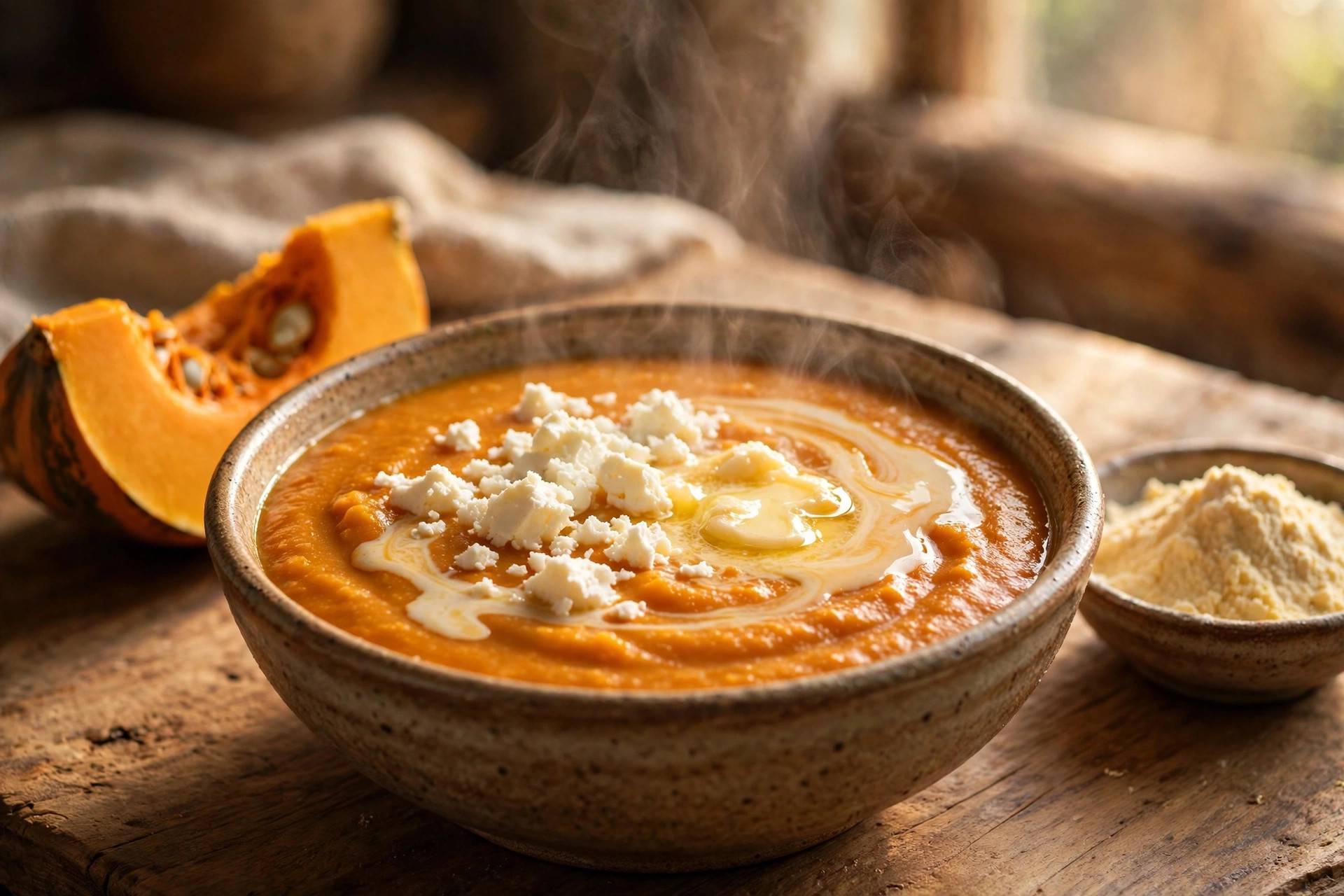
Kivevé — Paraguayan squash-and-cornmeal bowl
The squash (first in — the base)
1 kg (about 2.2 lb) andai [calabaza squash — a dense, sweet, orange-fleshed winter squash; substitute kabocha or butternut squash], peeled, seeded, and cut into chunks
3 cups water, to cover (add a splash more if needed)
Sweetener + thickener (stirred in once the squash is mashed smooth)
1 tbsp cane sugar (the traditional sweetness level — every documented traditional recipe includes sugar; up to 2 tbsp for a dessert-leaning bowl, but a fully sugar-free version would be an invention)
200 g (about 1¼ cups) harina de maíz [fine corn flour — Paraguayan-style, between corn starch and corn flour in grind; NOT cornstarch], sifted — added a spoonful at a time, in a thin rain, stirring constantly so it never lumps
Seasoning
1 tsp fine sea salt, more to taste
Dairy finish (off the hard simmer — enriches, never splits)
150 g queso paraguay [Paraguayan cheese — a soft, mild, slightly tangy fresh cheese; substitute whole-milk ricotta or farmer's cheese (vegetarian-rennet)], crumbled or finely chopped — stirred in off the heat until softened through
Warm milk, passed at the table — traditional serving: each diner pours milk into their own bowl to taste
Method
Put the andai [calabaza squash] chunks in a heavy pot with the water and salt. Bring to a boil, then lower to a steady simmer and cook 15–20 minutes until the squash is very tender and falls apart at a poke.
Mash the squash directly in the pot — in its own cooking water — with a potato masher until smooth. A few small soft lumps are traditional; blend only if you want it silkier.
Return to medium-low heat. Stir in the sugar and manteca [butter] until melted through.
Sift in the harina de maíz [fine corn flour] gradually, in a thin rain, stirring constantly with a wooden spoon. Cook 8–10 minutes, stirring, until the corn flour is fully cooked and the mixture turns creamy like polenta — it should pull slightly from the sides of the pot and hold soft ribbons.
Stir in the crumbled queso paraguay [Paraguayan cheese] for a minute until softened and melted through, then take the pot off the heat. Rest 5 minutes — kivevé thickens as it settles.
Serve warm (room temperature is also traditional) in bowls, family-style, with warm milk passed at the table — each diner pours milk in to taste. A hearty bowl on its own; the mild sweetness is the dish, not a dessert add-on.
Sharing instead of copying keeps this library free.
The documented traditional kid-friendly serving IS the same dish — a small warm bowl with milk poured at the table to each person's taste. Kivevé is already kid-shaped: soft, warm, mildly sweet, spoonable. Allergy: dairy (queso paraguay + milk + butter — the defining trio; no dairy-free substitution within this dish). Naturally gluten-free. Contains a small amount of added sugar.
“Kids love it” means flavors young taste buds enjoy — not safety for every child. Adults must supervise knives, heat and appliances — written for adults to prepare with children.
Storage & shelf life
Not available yet. We only show storage times backed by food-safety sources, and we haven’t verified this dish yet. If in doubt, throw it out.
Share a storage tip: coming soon
Story behind this dish
Kivevé is one of Paraguay's oldest home dishes, born in the Guaraní-Jesuit Missions of the colonial era and carried through Paraguay's hard 19th century, when home cooks stretched scarce meals with squash, cornmeal, and fresh cheese. Its name comes from the Guaraní word for 'reddish' — a nod to the deep-orange flesh of the andai (calabaza squash) at its heart. Traditionally cooked in clay pots and served warm or cool with milk poured at the table, it is remembered as the most famous vegetarian dish in Paraguayan cooking — a sweet-savory staple of grandmothers' kitchens, and a workhorse of meat-free Lenten cooking.
Please read: this recipe is ai-assisted · human-reviewed · not kitchen-tested. It was researched with AI assistance, reviewed by a human, and never tested in a kitchen — times, temperatures and quantities may need adjusting. Always use a food thermometer and follow current guidance from authorities such as the USDA. If something looks or smells wrong, don’t eat it. Allergies: ingredient lists are informational and may be incomplete — read every product label yourself, and if you are unsure, don’t eat it. This is not medical or nutritional advice.
Tried it? Tell us.
Submissions are read by our team before anything appears publicly.
Comments
Public, checked by a moderator before they appear.