3 pieces chuño [freeze-dried potatoes — potatoes trampled and frozen on the Altiplano, then sun-dried], rinsed and soaked overnight, squeezed and broken into pieces
6 cups water (the broth base)
The toasted sofrito [sautéed base] (first in the pot)
3 tbsp vegetable oil
3 medium carrots, chopped
1 medium onion with green top, chopped
1 medium tomato, chopped
1 deep plate of chigua [tender young quinoa leaves], chopped
½ tsp dried orégano
3 cloves ajo [garlic], minced
The grain (into the simmer)
~1 cup quinoa (20 heaped tbsp), rinsed very well in several changes of water until no foam remains, checked for stones
The vegetables (added once the grain simmers)
10 medium potatoes, quartered
Salt to taste
Arvejas [green peas] — optional add-in
To finish
Finely chopped fresh parsley
Method
Night before: soak the habas and chuño (overnight or several hours), then drain.
In a large pot, heat the oil and toast the carrots, quinoa leaves, onion, tomato, oregano, and garlic together, stirring, until fragrant and lightly browned — this toasted sofrito is the flavor base.
Rinse the quinoa thoroughly until the water runs without foam (removes the bitter saponin [natural soapy coating] on the grains) and pick out any grit.
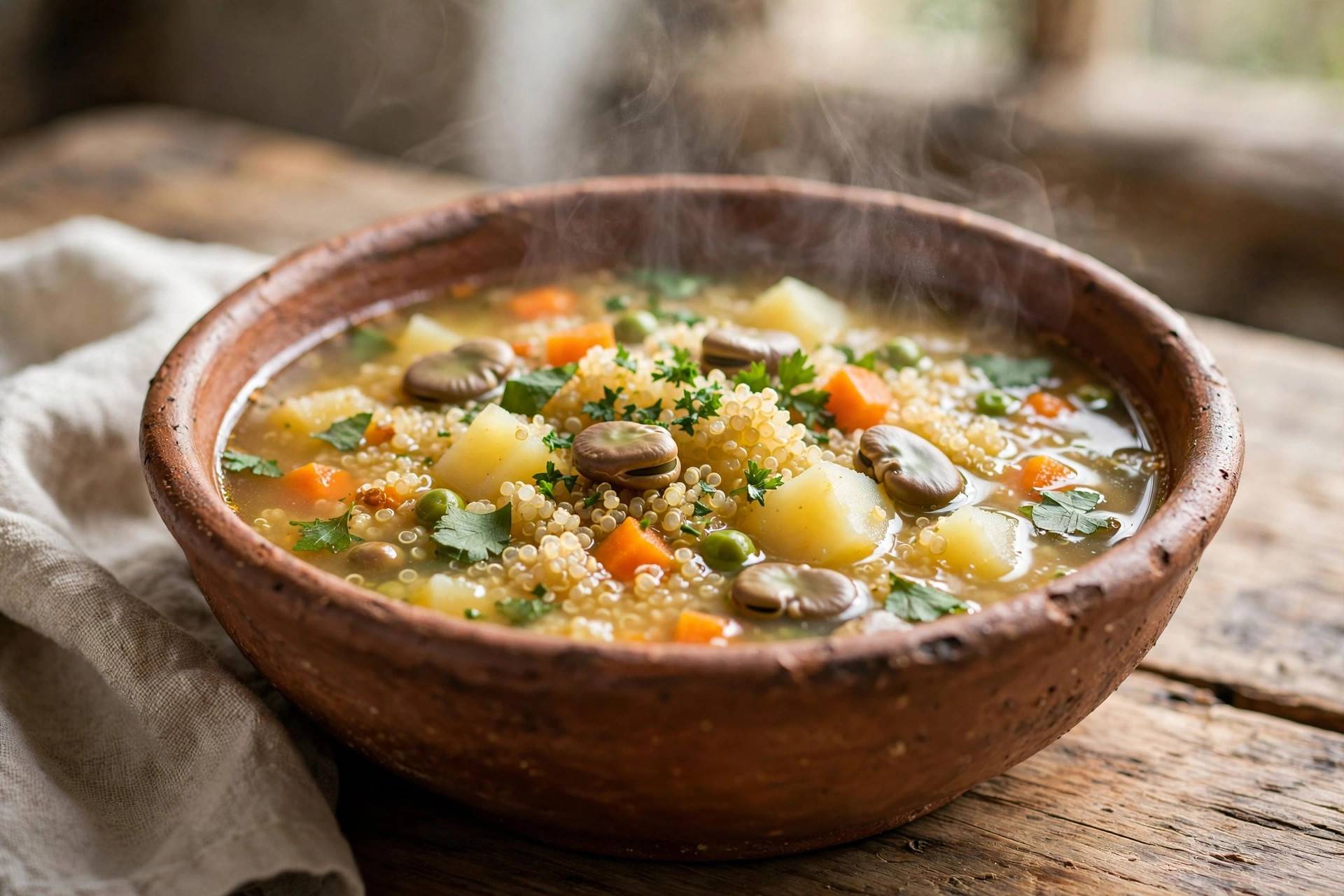
Add the 6 cups water to the pot with the toasted vegetables, the quinoa, the soaked chuño, and the soaked broad beans. Bring to a boil, then simmer until the quinoa bursts open ('reviente' — the little white tails appear), adding salt partway.
Add the quartered potatoes (and peas, if using) and cook until potatoes, chuño, and quinoa are all tender.
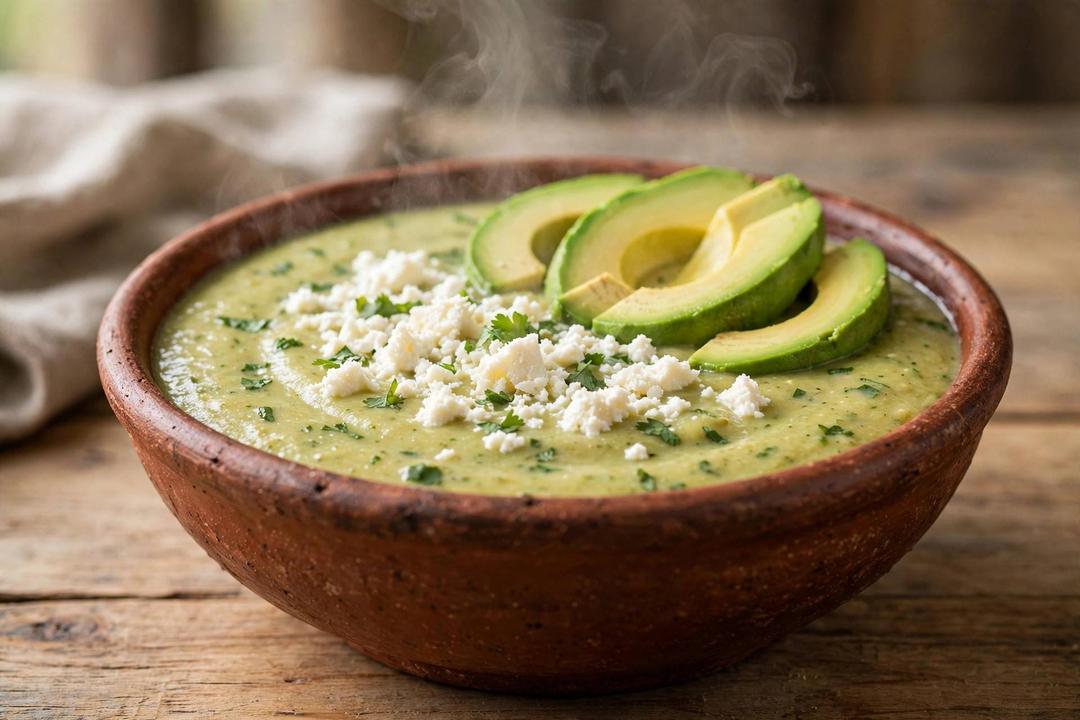
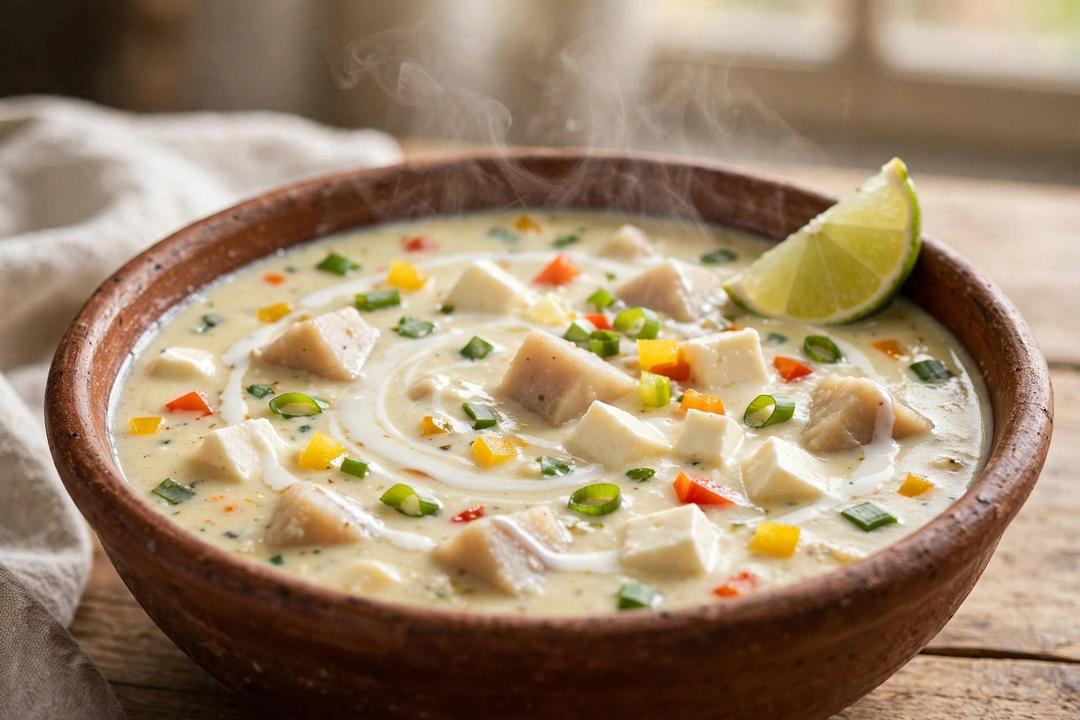
Take off the heat, ladle into deep bowls, and top with finely chopped fresh parsley.
Sharing instead of copying keeps this library free.
Bolivian quinoa soups are genuinely children's food — a Bolivian quinoa recetario (recipe collection) documents these soups as suitable for children from 7 months and 1 year onward; this is real daily fare for Andean kids. Allergy: naturally gluten-free and dairy-free; no egg; no common allergens as written. Rinse quinoa well — the unwashed saponin coating is bitter and mildly irritating.
“Kids love it” means flavors young taste buds enjoy — not safety for every child. Adults must supervise knives, heat and appliances — written for adults to prepare with children.
Storage & shelf life
Not available yet. We only show storage times backed by food-safety sources, and we haven’t verified this dish yet. If in doubt, throw it out.
Share a storage tip: coming soon
Story behind this dish
Quinoa was domesticated more than 5,000 years ago around Lake Titicaca, on this very Altiplano. The Inca called it chisaya mama (mother of all grains) and held it sacred; Spanish colonizers suppressed it in favor of wheat, and it survived on smallholder highland plots. It was nearly lost to the wider world until NASA studied it as a candidate space crop and the UN declared an International Year of Quinoa — with Bolivia still growing it on the same Altiplano among the world's top producers. The soup itself — quinoa simmered with chuño and habas — is how highland families have stretched the pantry through cold months for generations.
Please read: this recipe is ai-assisted · human-reviewed · not kitchen-tested. It was researched with AI assistance, reviewed by a human, and never tested in a kitchen — times, temperatures and quantities may need adjusting. Always use a food thermometer and follow current guidance from authorities such as the USDA. If something looks or smells wrong, don’t eat it. Allergies: ingredient lists are informational and may be incomplete — read every product label yourself, and if you are unsure, don’t eat it. This is not medical or nutritional advice.
Tried it? Tell us.
Submissions are read by our team before anything appears publicly.
Comments
Public, checked by a moderator before they appear.