2–3 tbsp fine cornmeal, only if the batter is runny
Method
Soften the husks: drop the large husks and tie strips into a pot of boiling water for 2 minutes; drain and set aside.
Grind the corn: blend kernels with milk in batches into a thick, creamy paste with a little texture left.
Mix the batter: stir in minced onion, melted butter, baking powder, salt, and optional sugar. Fold in ½ cup of the cheese. If the batter runs off a spoon, add cornmeal a spoonful at a time and rest 5 minutes.
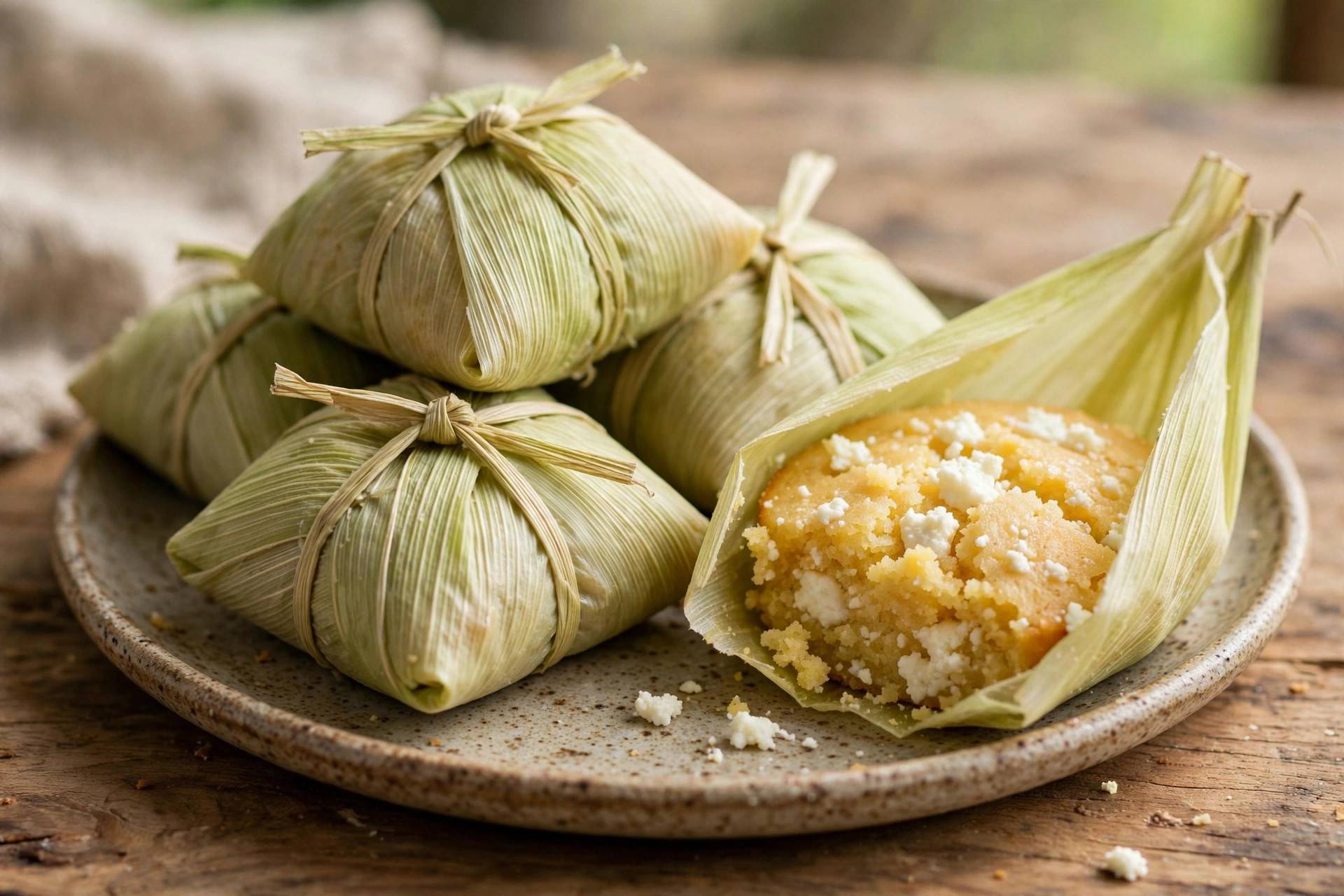
Wrap: overlap two large husks; spoon ~¼ cup batter onto the center, press a spoonful of remaining cheese into the middle, cover with a little more batter. Fold sides in, fold up the pointed end, tie gently with a husk strip. Repeat (makes ~12).
Steam: set a steamer basket in a deep pot with water below the rack (a tall tamalera [tall tamale-steamer pot] is traditional). Stand humitas upright or slightly tilted, opening side up, cover with leftover husks, lid on; steam over steady heat 40–45 minutes. Open one to check — center should be set, not liquid.
Rest 10 minutes, unwrap, serve hot. In Ecuador humitas are eaten for breakfast or the afternoon merienda [afternoon snack], usually with black coffee.
Sharing instead of copying keeps this library free.
Humitas dulces — a documented traditional sweet variant (cocina-ecuatoriana.com): add 1 extra tbsp sugar per batch and a splash more milk; otherwise identical. Kids unwrap their own steamy parcel like a present; it lands like a sweet corn cake.
“Kids love it” means flavors young taste buds enjoy — not safety for every child. Adults must supervise knives, heat and appliances — written for adults to prepare with children.
Storage & shelf life
Not available yet. We only show storage times backed by food-safety sources, and we haven’t verified this dish yet. If in doubt, throw it out.
Share a storage tip: coming soon
Story behind this dish
The name comes from the Quechua word 'humint'a', and humitas are pre-Hispanic Andean cooking — ground tender corn steamed in its own husks. Colonial-era chronicler Inca Garcilaso de la Vega described them as small corn cakes shared as gifts at festivities. Today they are a breakfast and afternoon-merienda staple across the Ecuadorian Andes — each family making them a little sweet or a little salty, always unwrapped at the table and eaten with coffee.
Please read: this recipe is ai-assisted · human-reviewed · not kitchen-tested. It was researched with AI assistance, reviewed by a human, and never tested in a kitchen — times, temperatures and quantities may need adjusting. Always use a food thermometer and follow current guidance from authorities such as the USDA. If something looks or smells wrong, don’t eat it. Allergies: ingredient lists are informational and may be incomplete — read every product label yourself, and if you are unsure, don’t eat it. This is not medical or nutritional advice.
Tried it? Tell us.
Submissions are read by our team before anything appears publicly.
Comments
Public, checked by a moderator before they appear.
Recipe adapted from: Ecuadorian Andes food coverage — humitas as the spring-season snack; fresh choclo as spring harvest food cocina-ecuatoriana.com — humitas dulces (documented sweet variant) — rewritten in our own words.