Allergens: not checked yet. Read the ingredient list and every product label before cooking.
Sign in to save favorites. Sharing instead of copying keeps this library free.
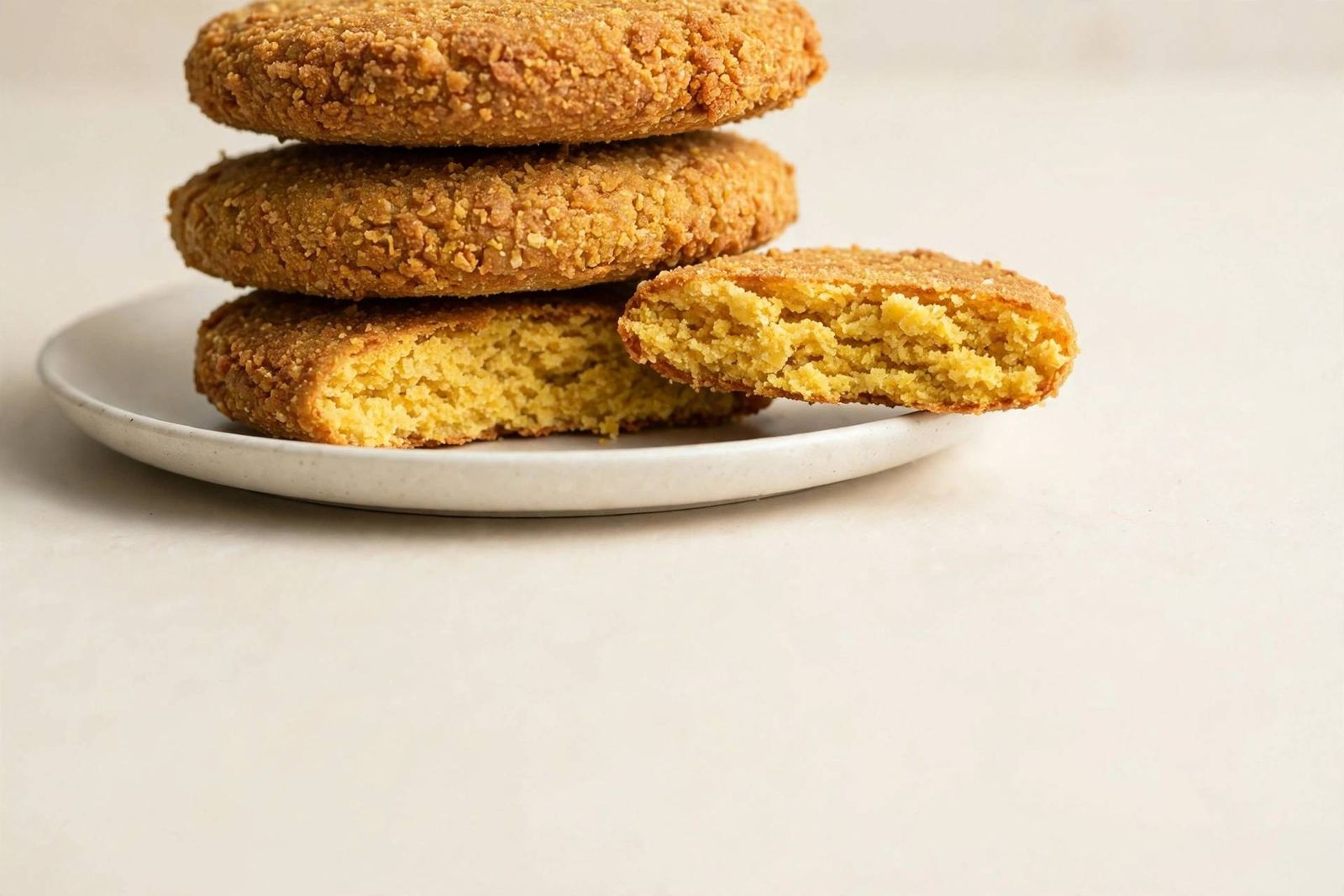
Mchadi
Dough
2–2.5 cups coarse stone-ground cornmeal (white traditional; yellow works — never fine corn flour)
¼–1 tsp salt, to taste
About 1 cup water, added gradually
To cook
Oil for shallow frying (sunflower or vegetable); a well-oiled hot skillet, cast iron ideal (a ketsi clay pan, traditionally)
Method
Put the cornmeal and salt in a bowl; add water a little at a time, mixing with hands or a fork, until a firm dough forms that holds together when squeezed — a wet-sand texture, not sticky and not crumbly. Optional: rest a few minutes so the coarse meal absorbs the water and the patties hold together.
With wet hands, divide into 6–8 portions; roll into balls and flatten into thick oval patties, about 1.5–2 cm thick.
Heat a thin layer of oil (3–4 mm) in a heavy skillet over medium heat until shimmering.
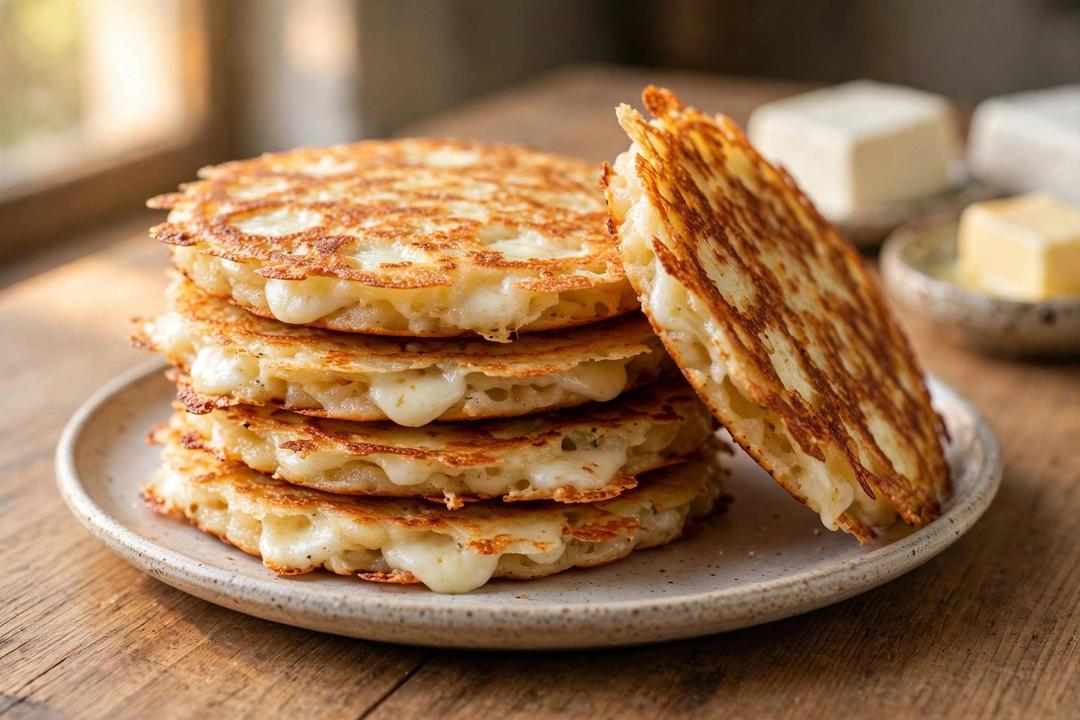
Fry in batches without crowding: COVER the pan and cook 5–6 minutes until the bottom is deep golden — the lid traps steam and cooks the thick interior through — then flip and cook UNCOVERED 5–6 minutes for a crisp crust.
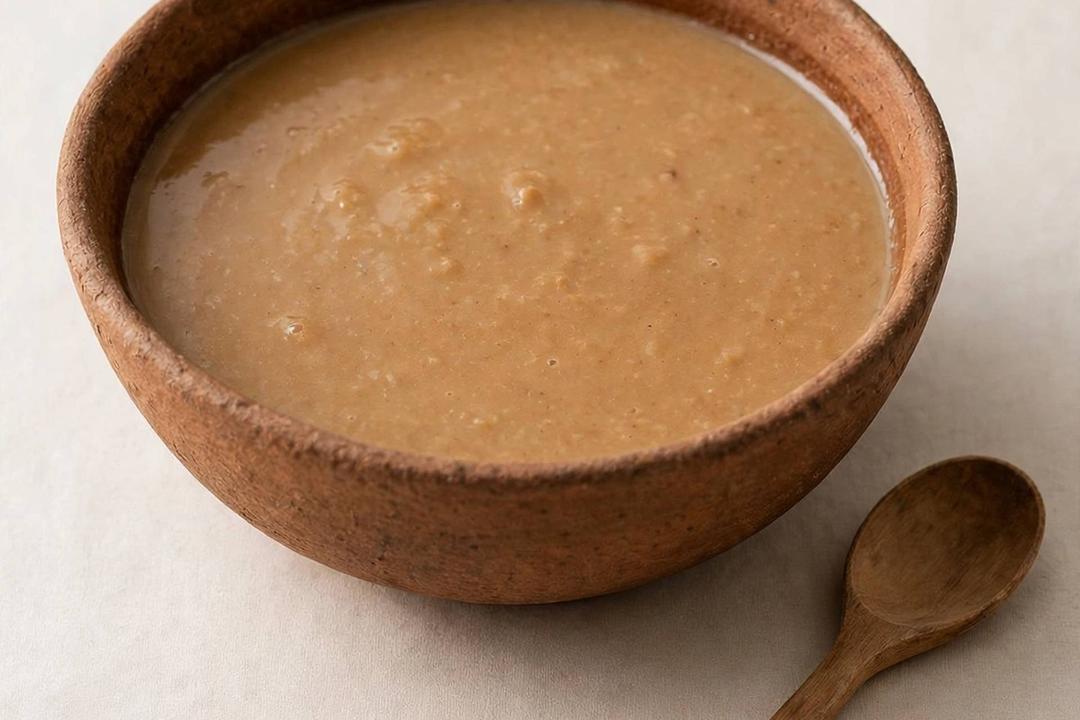
Drain briefly on paper towel, about 30 seconds. Serve hot, split and plain, beside the lobio — the crust softens as it cools.
Sharing instead of copying keeps this library free.
Mchadi is a great one for little hands: kids can mix the cornmeal and salt, add the water a splash at a time, and squeeze the dough until it feels like wet sand. With wet hands, kids roll balls and flatten them into thick patties — the thicker the better, so they stay soft inside. A grown-up handles the hot skillet and all the frying; kids can watch the patties turn deep golden, then help drain them and serve hot beside the lobio.
“Kids love it” means flavors young taste buds enjoy — not safety for every child. Adults must supervise knives, heat and appliances — written for adults to prepare with children.
Storage & shelf life
Not available yet. We only show storage times backed by food-safety sources, and we haven’t verified this dish yet. If in doubt, throw it out.
Share a storage tip: coming soon
Story behind this dish
Mchadi's name comes from the Georgian word for millet — before corn reached Georgia, this flatbread was made with millet; the name stuck even after corn took over.
Please read: this recipe is ai-assisted · human-reviewed · not kitchen-tested. It was researched with AI assistance, reviewed by a human, and never tested in a kitchen — times, temperatures and quantities may need adjusting. Always use a food thermometer and follow current guidance from authorities such as the USDA. If something looks or smells wrong, don’t eat it. Allergies: ingredient lists are informational and may be incomplete — read every product label yourself, and if you are unsure, don’t eat it. This is not medical or nutritional advice.
Tried it? Tell us.
Submissions are read by our team before anything appears publicly.
Comments
Public, checked by a moderator before they appear.