Allergens: not checked yet. Read the ingredient list and every product label before cooking.
Sign in to save favorites. Sharing instead of copying keeps this library free.
Motoho
Day 1 — the ferment (tomoso starter + slurry)
2 tbsp sorghum flour, for the tomoso (liquid starter): a spoon of a previous batch of motoho, or a spontaneous starter made by covering 2 tbsp sorghum flour with just enough warm water and leaving it 1 day
Warm water, just enough to cover the flour
1 cup (~160 g) sorghum meal (ground sorghum grain; red sorghum gives the classic brownish color)
2 litres warm water
Day 2 — the cook
The fermented slurry from Day 1 — hlama (the thick sour mixture) plus lekoele (the thin liquid decanted from the top)
1-1.5 litres water, for the pot
1-2 tbsp sugar, to taste (traditional; or serve with a splash of milk)
Method
Make the starter: if you have motoho from a previous batch, stir 2 tbsp of it into warm water — that is your tomoso. If not, cover 2 tbsp sorghum flour with just enough warm water, cover, and leave 1 day at room temperature until it smells pleasantly sour.
Ferment (Day 1, evening): mix the sorghum meal with the warm water in a clean bucket or jar to a thin slurry; stir in the tomoso. Cover and leave at room temperature 24 hours in warm weather (48-72 hours if cold — wrap the container in a blanket, the Basotho way).
Check: taste it — it should be distinctly sour, pleasantly so, not off. The fermentation is by lactic-acid bacteria, the same family that sours yogurt.
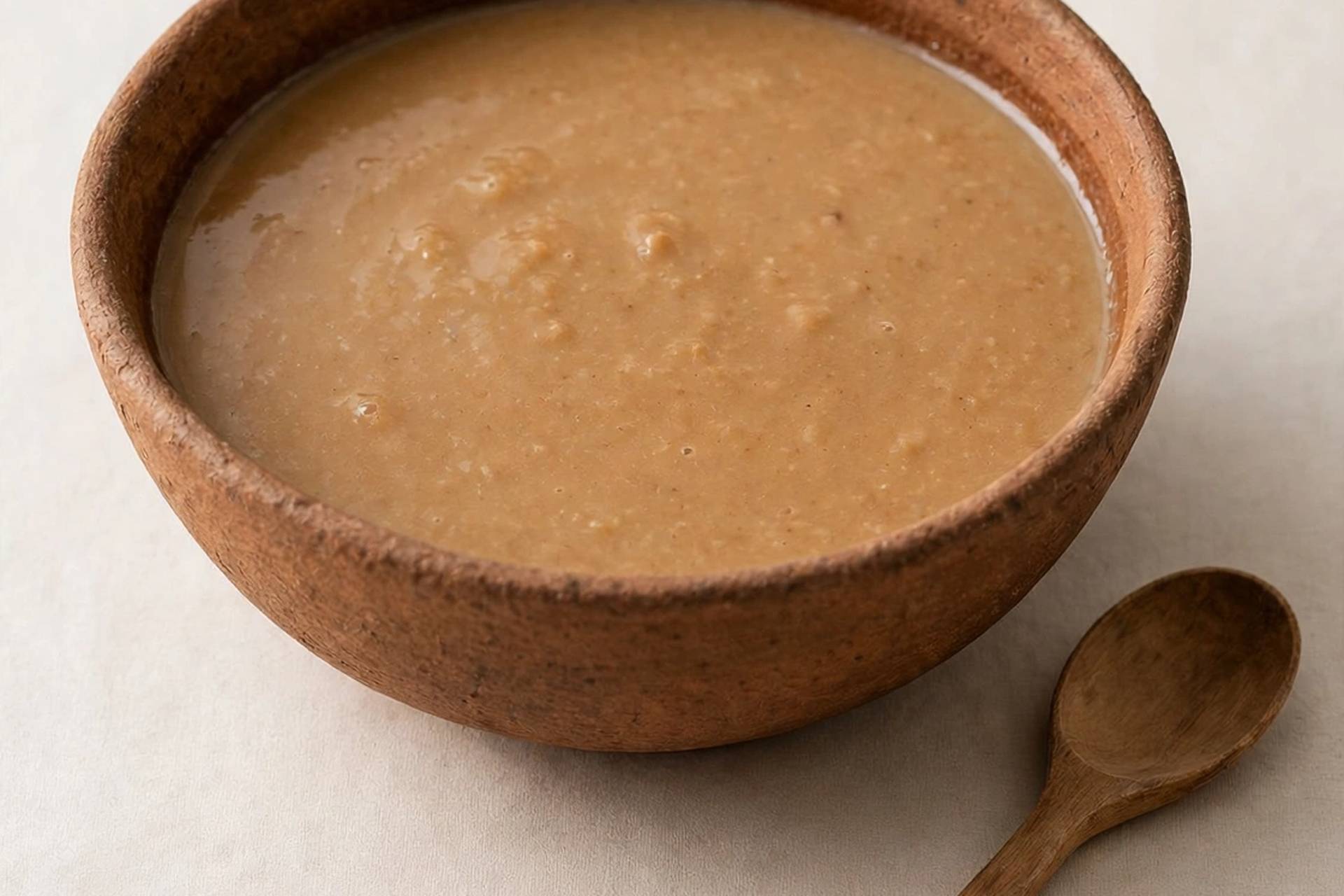
Cook (Day 2): bring 1-1.5 litres of water to a boil in a pot. Stir the lekoele (thin top liquid) into the boiling water, then gradually stir in the hlama (thick sour mixture), stirring constantly to avoid lumps. Simmer 30-40 minutes, stirring, until it thickens to a thin porridge. Cool before serving.
Serve warm or cool, in cups — with a little sugar stirred in, or a splash of milk, the way Basotho families do. Use clean containers and utensils; do not drink unboiled slurry — the traditional method boils the fermented slurry, so follow it.
Sharing instead of copying keeps this library free.
Kids love it
“Kids love it” means flavors young taste buds enjoy — not safety for every child. Adults must supervise knives, heat and appliances — written for adults to prepare with children.
Storage & shelf life
Not available yet. We only show storage times backed by food-safety sources, and we haven’t verified this dish yet. If in doubt, throw it out.
Share a storage tip: coming soon
Story behind this dish
Before Lesotho's breakfast reaches the cup, it ferments. Sorghum meal and warm water, soured overnight with tomoso — a spoon of the last batch, back-slopped like sourdough. Boiled, cooled, served with sugar or milk: motoho is the Basotho morning cup. Food scientists have studied it as a nourishing weaning food — and Basotho grandmothers knew that first.
Please read: this recipe is ai-assisted · human-reviewed · not kitchen-tested. It was researched with AI assistance, reviewed by a human, and never tested in a kitchen — times, temperatures and quantities may need adjusting. Always use a food thermometer and follow current guidance from authorities such as the USDA. If something looks or smells wrong, don’t eat it. Allergies: ingredient lists are informational and may be incomplete — read every product label yourself, and if you are unsure, don’t eat it. This is not medical or nutritional advice.
Tried it? Tell us.
Submissions are read by our team before anything appears publicly.
Comments
Public, checked by a moderator before they appear.